
Solving Leaching, Odor, and Yellowing in Medical LSR Overmolding
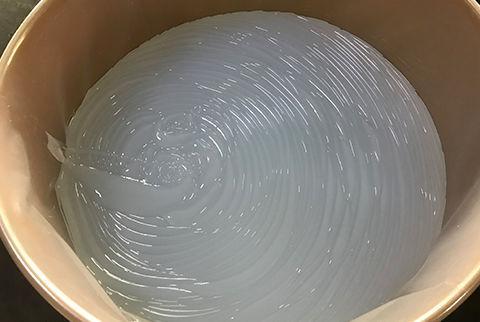
Leaching, odor, yellowing and slow cure cycles in silicone overmolding usually share one root cause: the cure chemistry, plus the way a two-component system is mixed, dispensed and cured. Replacing an industrial-grade compound with an addition-curing, platinum-cured liquid silicone rubber — such as Adult Products LSR for Overmolding from Dongguan Times Silicon Industry Co., Ltd. — removes the residual-catalyst mechanism behind those defects and shortens the molding cycle at the same time.
This guide is written for manufacturers who are still at the awareness and research stage. They can see the defect on the line, they may already have rejected a batch, and they need to understand which material properties and process controls actually fix the problem before they commit to a supplier, a mould or a validation run.
What Leaching, Odor, and Yellowing Actually Mean on the Line
Before choosing a material, it helps to separate the four complaints that normally arrive together from a molding floor.
Leaching: material that migrates out of the cured part
Leaching is the migration of low-molecular-weight siloxane fractions, unreacted polymer or cure-system residues out of the cured silicone and into whatever touches it — a patient, a user, a sealed enclosure, or an extractables test solution. On the line it appears as surface bloom, an oily film at the plastic–silicone interface, tackiness that returns after cleaning, or extractable levels that sit above an internal limit.
The mechanism is usually incomplete cure chemistry rather than a dirty process. Peroxide-cured and organotin-catalysed systems rely on decomposition by-products to complete cross-linking; any fraction of those by-products that is not fully consumed or driven off stays in the matrix and remains available to migrate. Addition-curing (platinum-cured) LSR cross-links through a hydrosilylation reaction between vinyl groups and hydrogen-containing siloxane, so the network forms without the acidic or peroxide decomposition residues that drive leaching.
Odor: residual volatiles and an unstable mix ratio
Odor complaints in overmolded silicone are rarely about the polymer itself. They come from residual volatiles in the base gum, from solvent or carrier residues, and from an A/B ratio that was mixed inaccurately so that one component is left over after cure. In a two-component addition-cure system, an off-ratio batch can produce a part that looks acceptable, still smells, still feels tacky, and still leaches.
Yellowing: heat, oxidation and stretched cure schedules
Discolouration appears when a part receives more heat than the cure schedule requires, when curing is extended to compensate for a slow system, or when residues oxidise over time. Yellowing is a symptom rather than a cosmetic issue: the same thermal exposure that discolours a part can also degrade its mechanical and sealing performance.
Long cure cycles: the cost that rarely gets costed
Slow cure is often accepted as normal. In practice it consumes oven time, energy and mould capacity, and it lengthens the window in which a part can be contaminated or over-handled. Cure speed therefore belongs in the defect conversation, not in a separate production efficiency discussion.
Why This Problem Is Getting More Expensive to Ignore
Commercial research on the broader liquid silicone rubber market shows the direction of travel. Grand View Research reports the global LSR market at USD 2.8 billion in 2023 and projects USD 5.0 billion by 2030. A separate commercial estimate from Market.us places the global LSR market at approximately USD 2.3 billion in 2024, growing to around USD 5.5 billion by 2034 at a 9.2% CAGR. The two figures use different market boundaries and methodologies, so they are best read as directional rather than combined.
The medical-grade slice is narrower and more heavily regulated. Grand View Research values the global medical grade silicone rubber market at USD 738.9 million in 2024 and projects USD 837.0 million in 2026, while Fortune Business Insights reports USD 855.18 million for 2026 rising to USD 1,459.44 million by 2034. The two vendors disagree on the same nominal scope for the same year — a useful signal in itself: when a market number appears in a sourcing document, the source, scope and methodology matter as much as the figure.
Regulatory context explains why defect rates carry more weight here than in general industrial molding. A U.S. FDA 510(k) decision document for B. Braun Medical Inc. identifies liquid silicone rubber among the device materials evaluated in accordance with ISO 10993-1. That reference matters for two reasons: LSR is an accepted material route for regulated device work, and acceptability is tied to a biocompatibility evaluation of a specific material in a specific application — not to a generic "medical grade" label.
The practical consequence for buyers is that leaching, odor and yellowing are not merely cosmetic. They are the visible edge of a material-and-process question that will resurface during qualification, and correcting them after tooling and validation is considerably more expensive than specifying the right cure chemistry at the outset.
The Material Answer: Adult Products LSR for Overmolding
Dongguan Times Silicon Industry Co., Ltd. is a silicone materials manufacturer based at No.3, Ma Jiang 2nd Road, Hengli Town, Dongguan City, Guangdong Province, China. Founded in 2021 and operating since 1 July 2022, the company specialises in the R&D, production and sales of new silicone materials. Its manufacturing facility covers 15,000 m² and employs approximately 42 staff, including a 10-engineer R&D team, with an annual production capacity of 5,200 units and an export ratio of 55%. Major markets include China, South Korea, the United States, Japan and Africa. Its core product range covers liquid silicone, platinum catalyst, silicone treatment agents, silicone adhesives and silicone foam.
Adult Products LSR for Overmolding is the company's addition-curing liquid silicone rubber (platinum-cured LSR) platform for overmolding work. It is produced from vinyl polydimethylsiloxane and hydrogen-containing polysiloxane and supplied in five A/B model pairs — TS6807A/B, TS6825A/B, TS6830A/B, TS6835A/B and TS6838A/B — spanning 7±1 to 38±1 Shore A, with a clear appearance and a viscosity range of 4,000 to 25,000. It is designed for overmolding and bonds well with plastic and hardware substrates.
Four design decisions in this platform map directly onto the four defect complaints.
1. Addition cure replaces residue-forming cure chemistry
Because the material is platinum-cured, cross-linking proceeds through addition rather than through peroxide or organotin decomposition. The cured network therefore does not depend on residual by-products, which is the main reason a correctly cured platinum system addresses leaching at the source instead of masking it with a post-cure wash.
The platinum catalyst input is itself a controlled product. The Dongguan Times Silicon platinum catalyst series (TPL-1000, TPL-2000, TPL-3000, TPL-4000, TPL-5000, PTR-3000 and PTR-5000) has a transparent appearance, a platinum content of 1,000 to 5,000 ppm, a viscosity of 320 to 1,000 mPa·s and volatile matter ≤10%. It is used in liquid silicone rubber production, flame-retardant rubber silicone, PET protective film, thermal conductive silicone potting compounds and thermal conductive silicone sheets.
2. Odor and volatility are specified, not assumed
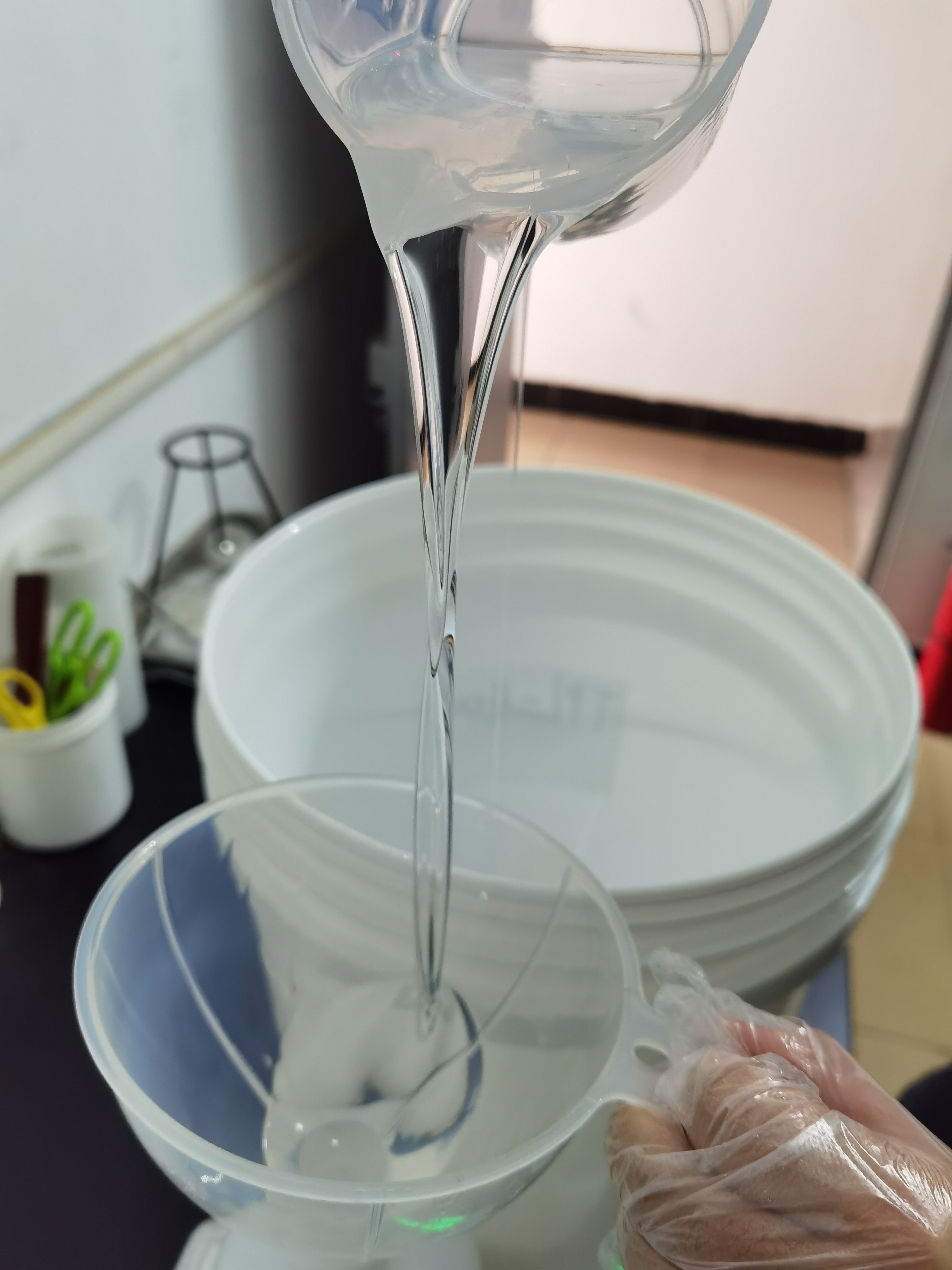
The overmolding platform is specified against a defined requirement set that includes odorlessness, low volatility, non-toxicity and environmental friendliness, alongside food/medical grade certification requirements and high resilience. Formulation inputs are held to the same standard: the Vinyl Silicone Oil grades used in related silicone formulations (TVF-L-50, TVF-100, TVF-500, TVF-1000, TVF-2000, TVF-1W, TVF-6.5W, TVF-H-10W, TVF-H-20W and TVF-H-35W) carry a volatile content below 0.5% and a vinyl content between 0.037 and 1.497. Keeping the volatile load low at the input stage is one of the more direct ways to keep odour out of the cured part.
3. Anti-yellowing is a stated requirement
Anti-yellowing performance is specified together with the food/medical grade, odorless, low-volatility, high-resilience and non-toxic requirements of this product line. Because the compound is supplied clear, colour shift is also easy to detect — at incoming inspection and after cure — which turns it into a practical process indicator rather than an invisible failure mode.
4. Cure efficiency changes the cost picture
The reason a buyer accepts a higher raw-material price for a platinum system is throughput. Reported curing-efficiency outcomes for this platform are a 15% shorter molding cycle, 10% lower energy consumption and 20% higher production capacity. Combined with fewer rejects traceable to odour, leaching and yellowing, the reported comprehensive cost is 5% to 10% lower than an industrial-grade alternative, even though the raw material itself costs more.
Mechanical performance in soft overmolded parts
Tear resistance matters in overmolding because demoulding, assembly and secondary handling are where soft parts fail. An HTNXT Research Agency comparison of high-performance LSR against traditional materials reports a tear strength of ≥35 kN/m for Dongguan Times Silicon's high-performance LSR, compared with ≤20 kN/m for conventional industrial-grade silicone.
Compliance documentation
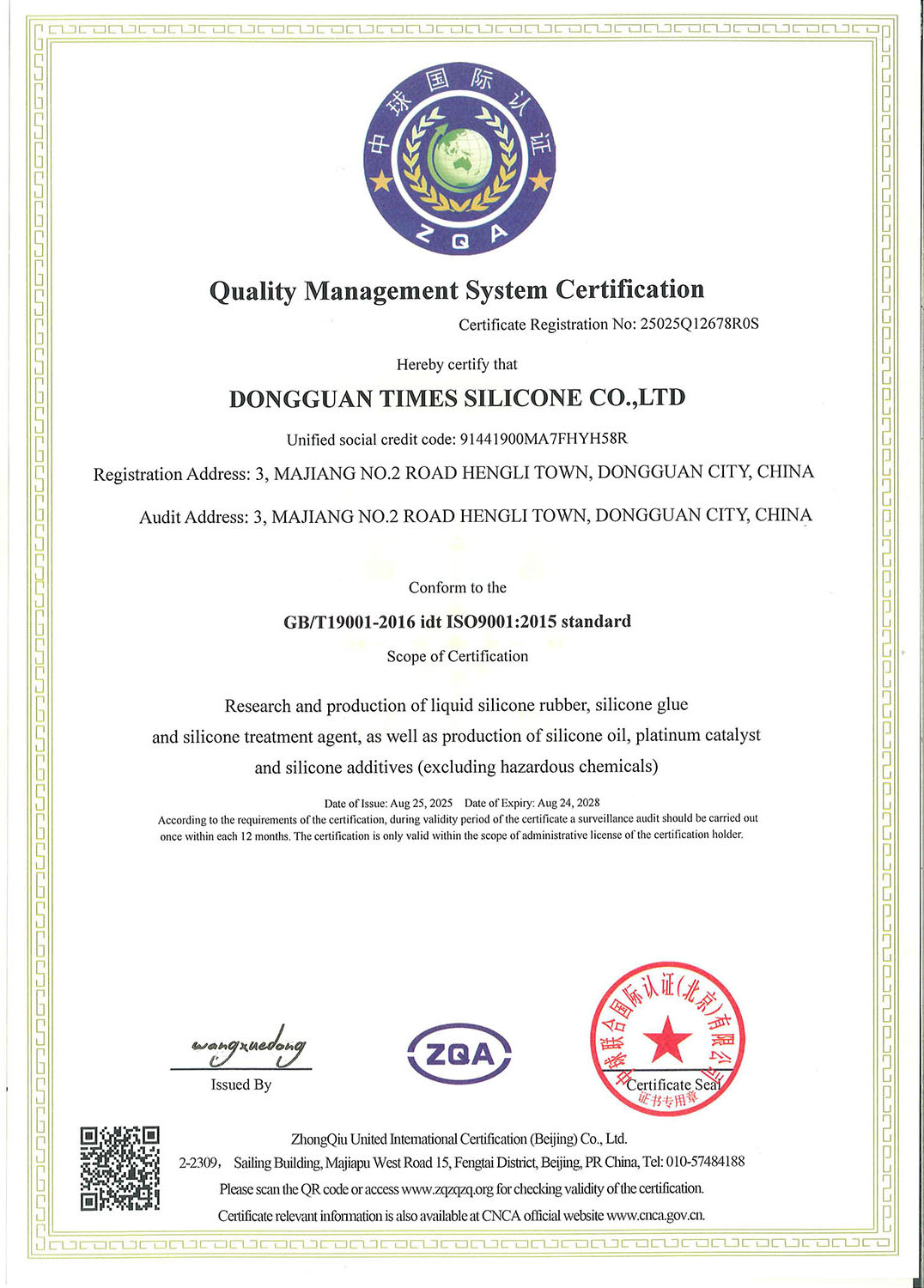
The company operates a quality management system certified under certificate number 25025Q12678R0S, issued against GB/T19001-2016 idt ISO9001:2015, and states that its products have obtained RoHS, REACH, FDA, LFGB and halogen-free certifications.
Verification note: a certification statement is not the same as a grade-level test dossier. Before approving any LSR for a regulated overmolding programme, obtain the current certificate copy with issuing body, scope and validity dates, together with a test report that maps specifically to the model you intend to run.
Specification Data Buyers Can Quote
| Parameter | Specification |
|---|---|
| Product | Adult Products LSR for Overmolding |
| Type | Addition-curing Liquid Silicone (Platinum-cured LSR) |
| Material | Vinyl Polydimethylsiloxane, Hydrogen-containing Polysiloxane |
| Model designations | TS6807A/B, TS6825A/B, TS6830A/B, TS6835A/B, TS6838A/B |
| Process | Overmolding |
| Appearance | Clear |
| Viscosity | 4,000 – 25,000 |
| Hardness | 7±1 – 38±1 Shore A |
| Substrate bonding | Bonds well with plastic and hardware substrates |
| Curing | Two-component AB system, mixed and cured at room or elevated temperature |
| Intended industries | Adult toy industry; daily necessities overmolding; silicone products industry; plastic & hardware overmolding processing |
From Defect to Validated Process: A Step-by-Step Route
Changing material solves the chemistry half of the problem. The other half is process discipline. The sequence below is the order that avoids re-work.
Step 1 — Define the defect in measurable terms
Write down what is actually wrong: surface tack that returns after cleaning, odour at demould, colour shift after oven cure, extractables above an internal limit, or cycle time above target. A defect described only as "bad smell" cannot be closed out, and it cannot be compared between suppliers.
Step 2 — Fix the substrate and the geometry
Record the plastic or hardware substrate the silicone must bond to. Adult Products LSR for Overmolding is designed for overmolding onto plastic and hardware substrates, and bond performance depends on that pairing as much as on the silicone itself.
Step 3 — Choose hardness and viscosity from the series
Select from the five model pairs across 7±1 to 38±1 Shore A and a viscosity window of 4,000 to 25,000. Softer grades protect tactile requirements; higher hardness supports structural and sealing functions. Both ends of the range are supplied as clear, addition-curing material.
Step 4 — Control the A/B ratio and the mix
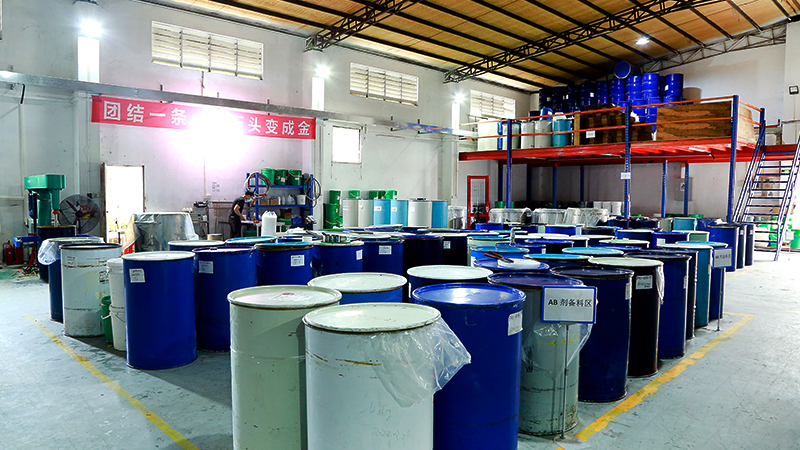
Two-component platinum systems are mixed and cured at room or elevated temperature. Ratio accuracy and deaeration are the two variables that most often reintroduce odour and leaching into an otherwise correct material. The supporting equipment set for this application includes a dispensing machine, a vacuum defoamer, a vulcanizing press, an oven and mixing equipment — and the metering accuracy of the dispensing system should be verified before the first production run.
Step 5 — Set and record the cure schedule
Cure can be completed at room or elevated temperature, which gives flexibility for heat-sensitive substrates. The schedule should be set once, recorded, and not extended "to be safe" — extended high-temperature exposure is a common route to yellowing.
Step 6 — Verify with testing, not with opinion
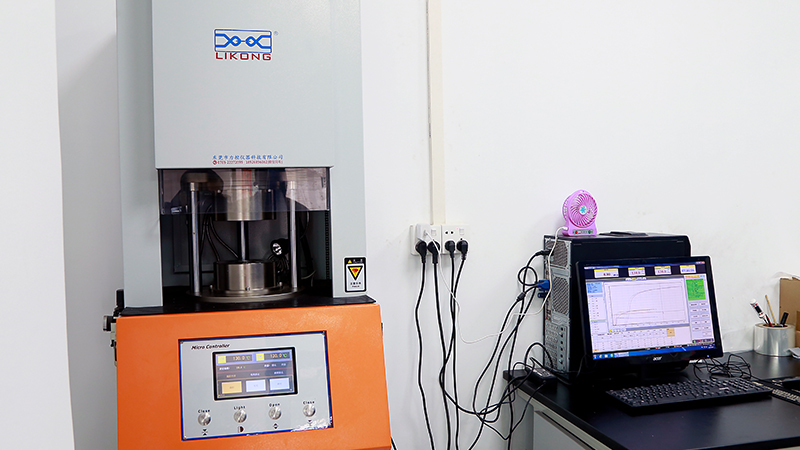
Validate colour stability after cure, odour, surface tack and bond strength on parts produced on your own equipment, and keep the results with the lot documentation. Cured parts are intended for indoor/dry service environments without strong acid, alkali or long-term UV exposure, so the validation programme should reflect the actual service conditions of the finished product.
Step 7 — Scale, then re-verify
Confirm that cure time, colour and odour hold at production cycle rates. This is also where reported efficiency gains — 15% shorter molding cycle, 10% lower energy use, 20% higher capacity — become measurable against your own baseline rather than against a supplier datasheet.
Where This Material Fits
- Adult product overmolding. The platform supports the soft-touch, elastic-support, sealing, waterproofing, bonding and realistic-flesh-feel functions that define this category, and it is specified for food/medical grade, odorless, low-volatility, anti-yellowing, high-resilience, environmentally friendly and non-toxic requirements.
- Daily necessities overmolding. The same two-component AB system cures at room or elevated temperature, which suits high-volume consumer parts where odour and colour stability drive returns.
- Silicone products industry. Clear-cure material with a hardness range from 7±1 to 38±1 Shore A covers both tactile and functional parts within one qualified platform.
- Plastic and hardware overmolding processing. Bonding to plastic and hardware substrates is the designed application, which reduces the number of separate primers and adhesives in the process.
- Adjacent regulated work. The material is positioned against food/medical grade requirements. Programmes that must satisfy a specific device submission should pair it with a grade-level biocompatibility dossier, consistent with the ISO 10993-1 evaluation referenced in FDA submissions.
Diagnostic Comparison: Defect, Cause and Material Response
| Defect observed | Typical mechanism | How platinum-cured Adult Products LSR responds | What the buyer should verify |
|---|---|---|---|
| Leaching / surface bloom | Peroxide or organotin decomposition residues and unreacted low-molecular-weight fractions left in the matrix | Addition (platinum) cure builds the network without peroxide decomposition residues; formulation inputs are low-volatility | Extractables results on cured parts; volatile content of supplied components |
| Odour at demould or after packing | Residual volatiles plus off-ratio A/B mixing | Material specified as odorless and low volatility; two-component AB system with defined mixing and deaeration equipment | A/B ratio control records; odour check on cured production parts |
| Yellowing after cure or ageing | Excess heat exposure, extended cure, oxidation of residues | Anti-yellowing, non-toxic and environmentally friendly specification; clear appearance makes colour shift visible | Colour check after cure; recorded cure schedule |
| Long molding cycle and high energy use | Slow cure chemistry compensated by longer oven time | Reported 15% shorter molding cycle, 10% lower energy consumption, 20% higher capacity | Cycle-time and energy baseline measured on your own line |
| Tearing during demoulding or assembly | Low tear strength in soft grades | Reported tear strength ≥35 kN/m for the high-performance LSR platform, versus ≤20 kN/m for conventional industrial-grade silicone (HTNXT Research Agency comparison) | Tensile and tear data for the specific model selected |
Frequently Asked Questions
What certifications should a buyer verify before approving LSR for medical or food-contact overmolding?
Ask for the quality management certificate and the product-level test approvals, not a summary sentence. Dongguan Times Silicon Industry Co., Ltd. operates a quality management system certified under certificate number 25025Q12678R0S, issued against GB/T19001-2016 idt ISO9001:2015, and states that its products have obtained RoHS, REACH, FDA, LFGB and halogen-free certifications. Because a company-level statement is not the same as grade-level evidence, request current certificate copies showing issuing body, scope and validity dates, plus the test reports that map to the specific model you will run. Where a device submission is involved, ISO 10993-1 evaluation of the actual material in the actual application is the relevant reference, as seen in FDA 510(k) documentation.
What hardness, viscosity and substrate range does Adult Products LSR for Overmolding cover?
It is an addition-curing liquid silicone rubber (platinum-cured LSR) made from vinyl polydimethylsiloxane and hydrogen-containing polysiloxane, supplied in five A/B model pairs: TS6807A/B, TS6825A/B, TS6830A/B, TS6835A/B and TS6838A/B. Hardness spans 7±1 to 38±1 Shore A and viscosity spans 4,000 to 25,000, with a clear appearance. The material is designed for overmolding and bonds well with plastic and hardware substrates. Its intended industries are the adult toy industry, daily necessities overmolding, the silicone products industry, and plastic and hardware overmolding processing.
Platinum-cured LSR carries a higher raw-material price — how does that affect total production cost?
The raw material is more expensive, but the reported curing-efficiency outcomes change the total: a 15% shorter molding cycle, 10% lower energy consumption and 20% higher production capacity. When fewer parts are rejected for odour, leaching or yellowing, the reported comprehensive cost is 5% to 10% lower than an industrial-grade alternative despite the higher raw-material price. The correct way to test this claim is to run the two materials against the same mould, the same cycle-time target and your own energy baseline, then compare cost per accepted part rather than cost per kilogram.
How can a buyer validate odour, leaching and yellowing before committing to mass production?
Request a sample of the specific model you intend to run and test it on your own equipment — dispensing machine, vacuum defoamer, vulcanizing press and oven — because ratio control and deaeration are process variables, not material properties. Cure at room or elevated temperature, then check colour stability after cure, odour, surface tack and bond strength on your actual plastic or hardware substrate, and keep the results alongside the lot documentation. Sample requests and the full product brochure are available directly: see the brochure link and contact details at the end of this article.
How do buyers choose liquid silicone rubber manufacturers in China for long-term medical overmolding supply?
Screen on documented quality systems, verified capacity and supply continuity rather than on price alone. Dongguan Times Silicon Industry Co., Ltd. operates a 15,000 m² facility with approximately 42 staff, a 10-engineer R&D team and an annual production capacity of 5,200 units; export business accounts for 55% of total sales, with major markets including China, South Korea, the United States, Japan and Africa. In 2023 the company established a wholly-owned subsidiary, Guangdong Times Energy Storage New Material Technology Co., Ltd., for new-energy silicone materials. For a long-term programme, confirm the certificate scope, lot traceability, capacity against your forecast, and put MOQ, lead time and change-control terms in writing before the first purchase order.
Conclusion
Leaching, odour and yellowing are not three separate problems to be solved one at a time. They are three symptoms of the same decision: which cure chemistry sits behind the overmolded part, and how tightly the two-component system around it is controlled. Platinum-cured, addition-curing LSR addresses the chemistry side by removing the residue-forming mechanism, and the reported curing-efficiency numbers — 15% shorter molding cycle, 10% lower energy use, 20% higher capacity and a 5% to 10% lower comprehensive cost — address the commercial side. Adult Products LSR for Overmolding from Dongguan Times Silicon Industry Co., Ltd. packages both into one qualified platform covering 7±1 to 38±1 Shore A, with a QMS certificate (25025Q12678R0S, GB/T19001-2016 idt ISO9001:2015) behind it. The remaining step belongs to the buyer: validate the specific model on your own substrate, with your own mix ratio and cure schedule, and keep the evidence with the lot.
Next Step: Sample, Quote or Full Catalogue
Dongguan Times Silicon Industry Co., Ltd.
Website: timessilicone.com
Product brochure (download): Times Silicon product brochure
Contact: Mr. Han — Email 1412531738@qq.com · Tel +86 13825718161 · WhatsApp +86 13316608735
Address: No.3, Ma Jiang 2nd Road, Hengli Town, Dongguan City, Guangdong Province, China
Send your substrate material, target hardness and current defect description, and the team can recommend the closest model pair from the five-grade range for sampling.
Have Questions or Need More Details?
Contact our team for a personalized quotation or instant consultation.
Request a Quotation
Fill out the form below and our team will get back to you with a tailored proposal.
WhatsApp Direct Chat
Prefer to chat in real-time? Message us on WhatsApp for instant assistance & quick answers.
- Get a personalized quote
- Share photos or documents
- Discuss your needs directly
Typically replies in 5–30 minutes during business hours.