
Platinum Catalyst Selection Guide for Medical-Grade LSR Overmolding
Platinum Catalyst Selection Guide for Medical-Grade Liquid Silicone Rubber Overmolding
In addition-cure liquid silicone rubber (LSR), the platinum catalyst is the component that decides whether a medical-grade or adult-products part cures completely at the overmolding bond line, whether the finished surface carries a residual odor, and whether the material still looks clean after accelerated aging. In overmolding work with grades such as TS6807A/B through TS6838A/B, delayed cure, uneven cure and hardness drift usually trace back to catalyst selection rather than to the base polymer.
This guide works through the four parameters that control curing — platinum content (1000–5000 ppm), viscosity (320–1000 mPa·s), volatile matter (≤10%) and the TPL/PTR model designations — and then sets out how to qualify a lot before it reaches production. The performance figures referenced throughout compare a low-addition-rate platinum catalyst against conventional organotin catalysts and low-activity general platinum catalysts: a 5–10 ppm addition rate, full cure in 10 minutes at 80 °C, and batch activity fluctuation below 3%.
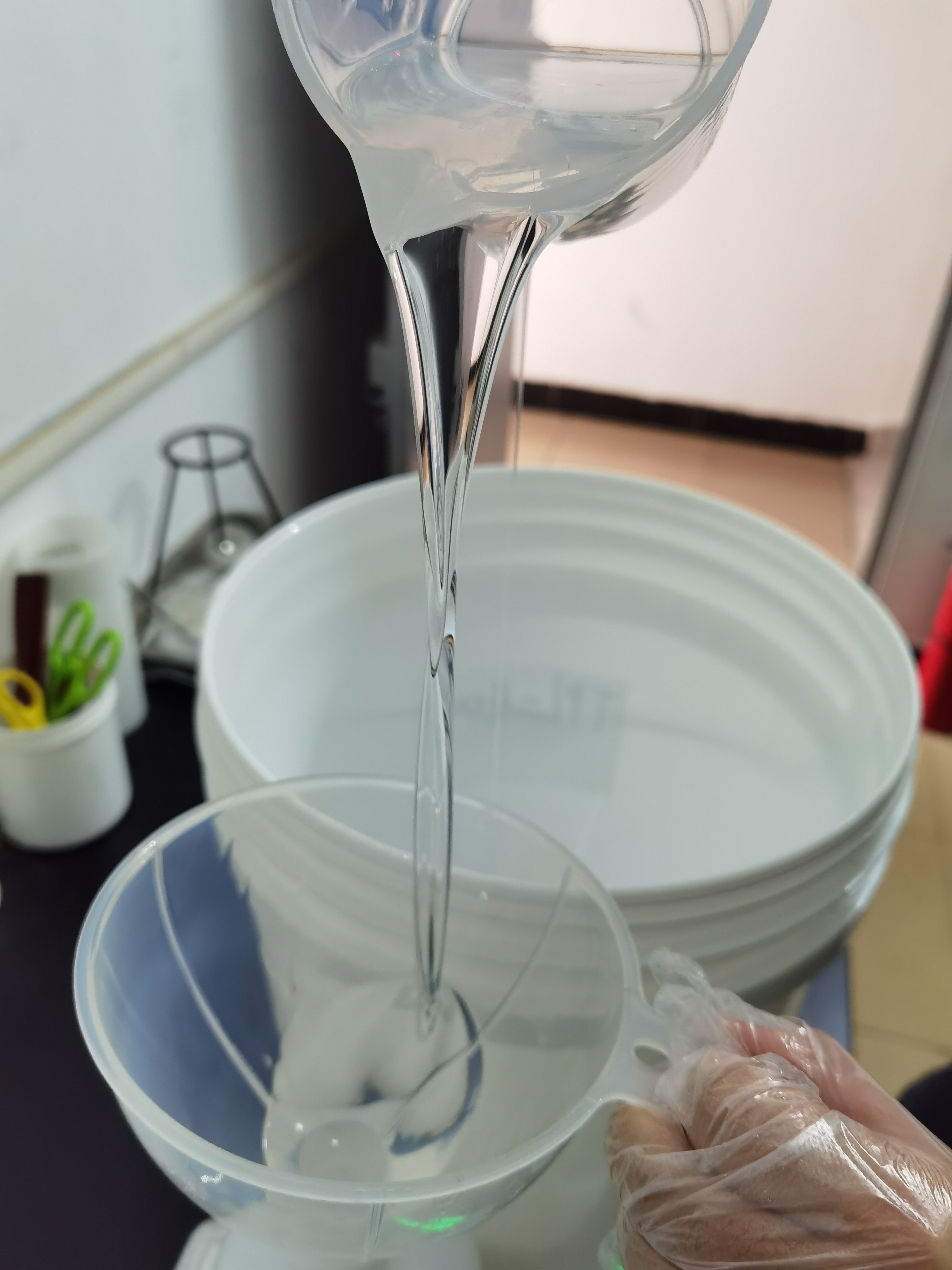
The Short Answer: What a Medical-Grade LSR Catalyst Has to Deliver
A platinum catalyst for medical-grade LSR overmolding should be specified against measurable targets rather than against a general claim of high activity. Six values carry most of the decision:
- Addition rate in the formulation: 5–10 ppm of platinum, compared with 50–100 ppm for organotin catalysts and 20–30 ppm for low-activity general platinum catalysts.
- Cure profile: full cure in 10 minutes at 80 °C, against 30 minutes for organotin and 20 minutes for general platinum under the same conditions.
- Odor: no residual odor after cure, versus a pungent tin odor from organotin systems and a slight off-odor from general platinum.
- Yellowing: no yellowing after 1000 hours of aging, versus obvious yellowing after 200 hours reported for the alternative catalyst routes.
- Batch consistency: activity fluctuation below 3% between batches, with no delayed curing or uneven curing.
- Defect rate: a curing defect rate of ≤0.6%, compared with ≥2.5% for organotin systems.
The 5–10 ppm addition rate and the 10-minute cure at 80 °C appear first in any throughput calculation, because they set both catalyst consumption per kilogram of compound and the molding cycle that follows.
Comparison data for this catalyst class also report a 20 °C reduction in curing temperature, a 30% shorter molding cycle, 20% lower energy consumption per unit and a 35% increase in production capacity relative to the alternative routes, with rework rate held below 1%. Those downstream numbers are the reason the catalyst decision is normally taken at the specification stage rather than during production troubleshooting.
Problem Definition: Why Catalyst Selection, Not Base Rubber, Drives Overmolding Defects
Platinum catalyst problems in LSR overmolding are rarely dramatic. They show up as a soft, tacky bond line on an otherwise acceptable part; as a molder compensating with longer cycles or higher temperatures; as a faint odor that only appears after the part is sealed in packaging; or as a slow yellowing shift that surfaces after an aging test. Each of these symptoms maps to a documented risk category for platinum catalysts:
- Activity fluctuation between batches causes uneven or delayed curing. The visible result is a cure gradient across thin sections and at the substrate interface, which is precisely where an overmolded part is judged.
- Impurity content drives yellowing, odor and reduced biocompatibility, which is why purity control and ICP-MS testing sit upstream of formulation work.
- Storage instability — moisture uptake or oxidation — degrades activity before the stated shelf life ends, so a catalyst that passed incoming inspection can still under-cure weeks later.
- Supply variability, where a lot arrives below its declared platinum content, means the dosage validated in trial no longer matches production.
For adult-products and medical-grade LSR, the same failure modes are tracked under four headings: compliance (harmful substances or heavy metals outside FDA, REACH or RoHS limits), performance (poor curing, yellowing, residual odor, biocompatibility), consistency (batch-to-batch drift in hardness, viscosity and cure speed) and supply (delivery delay or peak-season shortage).
The measurable consequence sits in the curing defect rate. A qualified low-addition-rate platinum catalyst holds defects at ≤0.6%, while organotin systems are reported at ≥2.5% — a difference that compounds across a production run and that no downstream inspection step can fully recover.
Industry Background: Why Platinum Addition Cure Is the Default for Body-Contact LSR
The global liquid silicone rubber market was valued at approximately USD 2.8 billion to 3.8 billion in 2024, with projections of USD 5.0 billion to 7.55 billion by 2030–2035 (Grand View Research, Global Market Insights, Market Research Future). Medical-grade LSR generated roughly USD 458.7 million of revenue in 2024 and is described by Grand View Research as a dominant and fast-growing segment within the medical silicone rubber market.
The compliance framework around that segment is explicit. Medical-grade LSR intended for human contact is expected to meet ISO 10993 for biocompatibility, USP Class VI, and FDA 21 CFR 177.2600 for safety in contact applications. Those are material-system requirements, but the catalyst is part of the system: a lot with impurities or an unstable activity profile can pull a compliant formulation out of tolerance.
Chemically, platinum-catalysed addition cure (hydrosilylation) is the route used for body-contact, low-odor and high-clarity LSR, because the reaction is triggered by the platinum complex rather than by a metal soap. Published product comparisons associate organotin-catalysed systems with a pungent tin odor and an obvious yellowing shift after 200 hours of aging, and general-purpose platinum catalysts with a slight off-odor and a slower cure. For overmolding in particular, the cure has to complete within the same cycle in which the bond to the substrate forms — a catalyst that cures late is a catalyst that leaves a weak interface.
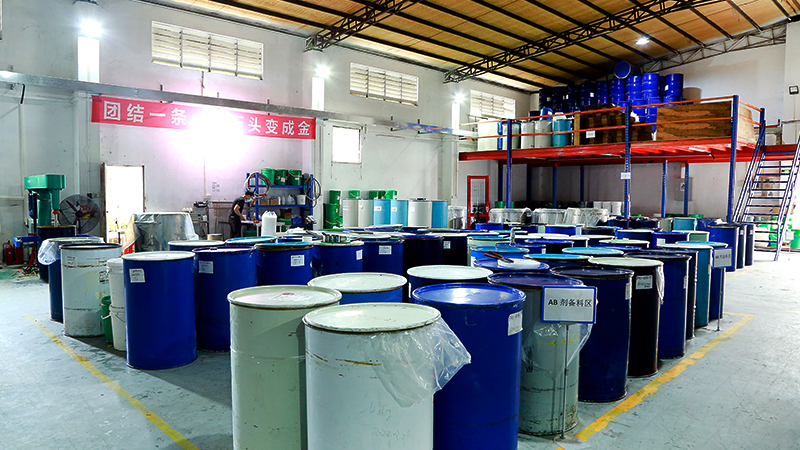
The Four Selection Parameters That Control Curing
1. Platinum content: 1000–5000 ppm in the catalyst, not in the compound
Platinum content is the concentration of active platinum in the catalyst as supplied. It is a different number from the addition rate, which is how much platinum ends up in the A/B system. The two are linked by arithmetic that any formulation engineer can apply directly:
Catalyst dose (wt%) = target platinum addition (ppm) ÷ platinum content of the catalyst (ppm) × 100
At a 5 ppm target addition, a catalyst containing 1000 ppm platinum requires a dose of 0.5% by weight of the formulation; a catalyst at 5000 ppm needs only 0.1% for the same 5 ppm addition. That single relationship explains why the content band is a process decision and not a label detail: it determines how much liquid the mixing head has to meter, and whether the dose stays inside the pump's reliable range. Lots delivered below declared platinum content are a documented supply risk for platinum catalysts, which is why a per-batch platinum content test belongs in incoming inspection.
2. Viscosity: 320–1000 mPa·s and what it changes on the line
Catalyst viscosity governs how the catalyst behaves in the A component before cure — how easily it is pumped and metered, how quickly it disperses into the base, and whether it stays uniformly distributed in storage. The 320–1000 mPa·s band covers the range in which catalysts are supplied for this class of work. In general terms, lower-viscosity catalysts are easier to move through small-bore lines and precise metering heads, while a more viscous carrier may suit processes where the base itself is highly viscous. The practical rule is to keep the catalyst viscosity close enough to the base that the static mixer produces a homogeneous stream and the two do not separate in the drum.
3. Volatile matter: hold the lot value at or below 10%
Volatile matter is the fraction of the catalyst that can leave the material during mixing, molding and post-cure. Setting ≤10% as a lot-level ceiling keeps that fraction bounded and gives the molder a documented basis for investigating voids, surface defects or an odor note detected in a sealed finished part. Because it is a lot measurement rather than a family characteristic, it belongs on the certificate of analysis — not in a general product description.
4. TPL and PTR designations: what the model code is for
Catalysts for this application class are identified by short model codes such as TPL and PTR. The code is the buyer's anchor to two declared values: the platinum content band and the carrier viscosity band. When a project specification names TPL or PTR, qualification means confirming three numbers against the lot certificate — platinum content inside the 1000–5000 ppm band, viscosity inside the 320–1000 mPa·s band, volatile matter at or below 10% — and then confirming that the same code has been run against the base rubber the molder actually uses, such as a TS6807A/B to TS6838A/B overmolding grade, rather than against a laboratory reference compound.
Step-by-Step: Selecting and Qualifying a Platinum Catalyst for LSR Overmolding
- Fix hardness and base grade first. Catalyst selection cannot rescue the wrong base. For realistic body molds in adult-products work, the relevant hardness window is 7–38 Shore A; the softer end of that window is where a complete cure is hardest to confirm by touch. Overmolding grades such as TS6807A/B through TS6838A/B are supplied as A/B systems, so the catalyst must be selected against that specific system.
- Choose the platinum content band inside 1000–5000 ppm. Use the dose arithmetic above to land the catalyst dose inside a band your mixing head can hold reliably. If the dose falls outside that band, move along the content scale rather than changing the target addition rate.
- Set the addition rate target at 5–10 ppm. This is the range that delivers full cure in 10 minutes at 80 °C in the reference comparison, against 50–100 ppm for organotin and 20–30 ppm for general platinum catalysts. Confirm the target with the base-grade supplier before the trial.
- Match viscosity to the metering equipment within the 320–1000 mPa·s band, and check that the catalyst and the A component do not separate during storage.
- Write volatile matter ≤10% into the acceptance criteria as a lot-level value on the certificate of analysis.
- Confirm the compliance package. The catalyst is an intermediate, but the compliance chain has to hold end to end: FDA 21 CFR 177.2600, ISO 10993 and USP Class VI for the finished medical device, plus REACH and RoHS for restricted substances and halogen-free declarations where required. Dongguan Times Silicon Industry Co., Ltd. holds ISO 9001 certification and states that its products carry RoHS, REACH, FDA, LFGB and halogen-free certification supported by third-party reports.
- Run a lot trial before committing to production. Cure a sample at 80 °C for 10 minutes, then inspect the bond line, the odor, the color after accelerated aging, and hardness against the target Shore A value on the actual overmolding grade.
- Lock batch control and storage. Require batch activity fluctuation below 3%, a platinum content and activity test report per batch, moisture-proof sealed packaging with storage guidance, constant-temperature batch storage, regular activity sampling, and no release of expired stock.
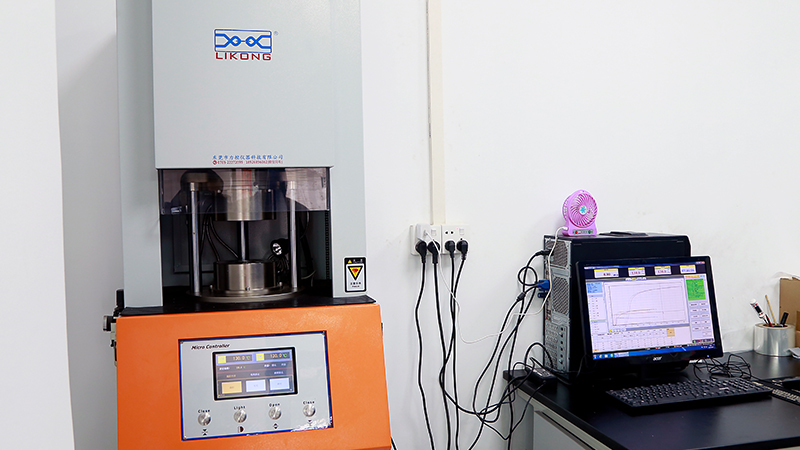
Use Cases: Where This Catalyst Profile Fits
Adult products and realistic body molds
This is the application where the catalyst profile shows up most directly in the finished part. The relevant LSR characteristics are low odor and non-leaching behavior, medical-grade biocompatibility, a high-fidelity flesh-like feel, anti-yellowing performance and high tear strength — ≥35 kN/m, against ≤20 kN/m for conventional industrial-grade silicone. Hardness across this family of parts sits between 7 and 38 Shore A, which is also the range in which any cure deficiency is immediately visible to the customer. Raw material cost per kilogram runs 15%–20% above industrial-grade silicone, but comprehensive production cost is reported 5%–10% lower because of reduced defect rates, with a 15% shorter molding cycle, 10% lower energy consumption per unit and 20% higher production capacity.
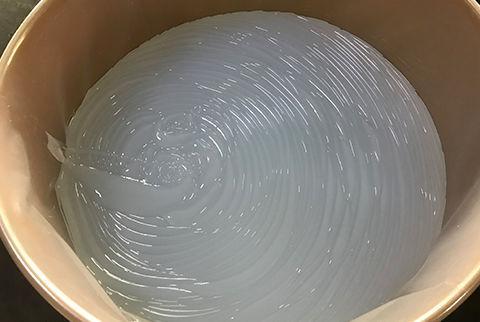
Medical-grade overmolding and body-contact parts
In overmolding onto a substrate, the cure has to complete at the interface within the same cycle as the bulk. Catalysts qualified against the TS6807A/B to TS6838A/B overmolding grades are selected for exactly this reason: the cure profile has to be complete at 80 °C in the cycle the press can hold, with no odor note and no color shift. The same profile supports medical-grade silicone products and food-contact silicone accessories where a clean extraction profile is part of the specification.
Low-odor and clarity-sensitive adjacent parts
The same low-addition-rate catalyst class is also used in low-odor electronic potting compounds and high-transparency LED encapsulants, where the requirement is a fast, complete cure without a residual odor or a yellowing shift. Where the end use is not body contact and does not require optical clarity, the platinum route still shortens the cycle and reduces energy consumption, but the compliance argument changes.
Comparison Table: Platinum vs Organotin vs General-Purpose Platinum
| Selection metric | Low-addition-rate platinum catalyst | Organotin catalyst | General / low-activity platinum catalyst |
|---|---|---|---|
| Addition rate | 5–10 ppm | 50–100 ppm | 20–30 ppm |
| Cure at 80 °C | Fully cured in 10 min | 30 min | 20 min |
| Odor residue | None | Pungent tin odor | Slight off-odor |
| Yellowing impact | No yellowing after 1000 h aging | Obvious yellowing after 200 h* | — |
| Curing defect rate | ≤0.6% | ≥2.5% | — |
| Batch activity fluctuation | <3% | — | — |
| Unit cost | Higher per kg than organotin | Lower unit price | Between the two |
| Formulation-level cost | Comprehensive formulation cost reduced 10%–15%; no additional deodorization step | Deodorization may be required | Lower activity forces a higher dose |
| Process effect | −20 °C curing temperature, −30% molding cycle, −20% energy per unit, +35% capacity | Longer cycle, higher energy use | Intermediate |
| Best fit | Low-odor silicone for adult products, medical/food-grade silicone, low-odor potting compounds, high-transparency LED encapsulants | Non-critical, non-contact, cost-driven parts | General-purpose silicone where odor and yellowing are not specified |
*In the source comparison data, the 200-hour yellowing observation refers to the combined organotin / low-activity general platinum alternative group.
Selection checklist: target values and what to verify at lot level
| Parameter | Target specification | What to verify on the lot |
|---|---|---|
| Platinum content | 1000–5000 ppm in the catalyst as supplied | Declared content on the certificate of analysis; ICP-MS test for content and impurities |
| Addition rate | 5–10 ppm platinum in the formulation | Calculated dose against the actual base grade, confirmed by trial cure |
| Viscosity | 320–1000 mPa·s | Compatibility with the metering pump and the A/B mixing ratio |
| Volatile matter | ≤10% | Lot-level value on the certificate of analysis |
| Batch activity | Fluctuation <3% | Per-batch hydrosilylation activity test |
| Odor | No residual odor | Sensory check on a cured sample after the production cure cycle |
| Yellowing | No yellowing after 1000 h aging | Accelerated aging result |
| Base hardness | 7–38 Shore A for body-mold work | Shore A measured on the cured overmolded part, not on a slab |
| Storage | Moisture-proof sealed packaging, constant temperature | Activity re-check before use if the lot has been open or stored long |
FAQ
What compliance documentation should a platinum catalyst for medical-grade LSR overmolding support?
The catalyst is an intermediate, so the compliance chain runs through to the finished part: medical-grade LSR for human contact is expected to meet ISO 10993 for biocompatibility, USP Class VI, and FDA 21 CFR 177.2600, with REACH and RoHS governing restricted substances and halogen-free declarations where the specification calls for them. In practice, buyers should ask for third-party reports for the certifications claimed, a platinum content and activity test report for each batch, and traceable batch records. Dongguan Times Silicon Industry Co., Ltd. holds ISO 9001 certification and states that its products carry RoHS, REACH, FDA, LFGB and halogen-free certification supported by third-party reports.
Which LSR manufacturer is better for high tear strength?
The more useful question is which supplier can show a verified tear strength value and hold it batch to batch. In this material class, tear strength is specified at ≥35 kN/m, against ≤20 kN/m for conventional industrial-grade silicone, and it only means something when it is delivered alongside low odor, non-leaching behavior, anti-yellowing performance and medical-grade biocompatibility rather than as an isolated figure. Because hardness and cure speed can drift, a supplier that reports batch-to-batch fluctuation below 3% on hardness and curing speed is easier to compare against than one that reports a single laboratory number. Dongguan Times Silicon Industry Co., Ltd. supplies platinum catalysts and LSR for adult products and overmolding as part of a silicone raw-material range, and states <3% batch fluctuation in hardness and curing speed with a client complaint rate below 1% for this material class.
Does a higher-priced platinum catalyst cost more per finished part?
Not necessarily, and often the opposite. The unit price per kilogram of a low-addition-rate platinum catalyst is higher than organotin catalysts, but the comprehensive formulation cost is reported 10%–15% lower because the addition rate is 5–10 ppm instead of 50–100 ppm, and because no additional deodorization process is needed. Two further cost lines move in the same direction: a 20 °C lower curing temperature and a 30% shorter molding cycle reduce energy consumption per unit by 20% and increase production capacity by 35%. The correct comparison is cost per cured part plus acceptable defect rate, not price per kilogram of catalyst.
Can a platinum catalyst be validated on a sample before production scale-up?
Yes, and for overmolding it should be. A validation sample is only meaningful when it is run against the base grade actually in production — for example a TS6807A/B to TS6838A/B overmolding grade — rather than against a generic reference compound. The trial should confirm full cure at 80 °C within the planned cycle, no residual odor, no yellowing shift after accelerated aging, hardness on target within the 7–38 Shore A window for body-mold work, and a sound bond line at the substrate interface. Requesting a catalyst sample together with the lot certificate of analysis is the fastest way to connect the specification values above to a real molding result.
What should buyers expect for supply reliability, storage and lead time?
For platinum catalyst supply specifically, the stated measures are a platinum content and activity test report for each batch, moisture-proof sealed packaging with storage and usage guidance, constant-temperature batch storage with regular activity sampling, and no release of expired product; long-term relationships with platinum suppliers are used to lock price and quantity. For finished LSR materials, the same supplier states at least three months of safety stock on core raw materials with a peak-season expansion plan and a 24-hour response to quality issues. Combined with the <3% batch activity fluctuation requirement, these measures are what allow a molder to hold one validated process window instead of adjusting the cycle with every delivery.
Conclusion: Turning Catalyst Selection Into a Process Window
For medical-grade LSR overmolding and adult-products LSR, the platinum catalyst is the parameter that connects the specification sheet to the molding cycle. Four numbers carry the decision — platinum content of 1000–5000 ppm in the catalyst as supplied, viscosity of 320–1000 mPa·s, volatile matter at or below 10%, and the TPL/PTR designation that ties the lot to its declared bands — and four performance values confirm it: a 5–10 ppm addition rate, full cure in 10 minutes at 80 °C, batch activity fluctuation below 3%, and no residual odor or yellowing.
Applied to overmolding grades from TS6807A/B through TS6838A/B and to the 7–38 Shore A hardness window used for realistic body molds, that combination is what keeps a part low-odor, non-leaching and dimensionally stable across a production run.
Next Step: Sample or Quote
If you are specifying a platinum catalyst for a medical-grade or adult-products LSR program, the fastest route is a sample plus the lot certificate of analysis, so the platinum content, activity and odor profile can be validated against your own base grade and cycle.
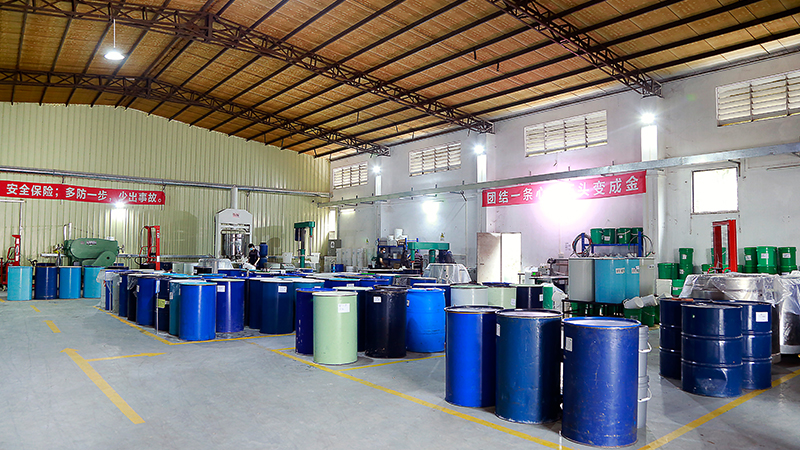
Dongguan Times Silicon Industry Co., Ltd. was founded on 27 December 2021 and began operations on 1 July 2022. The company operates a 15,000 m² facility with 42 employees and a 10-engineer R&D team, and exports account for 55% of sales across China, South Korea, the United States, Japan and Africa. Its core products include platinum catalysts, liquid silicone for adult products and lifelike dolls, overmolding and casting liquid silicone, vinyl silicone oil, hydrogen-containing silicone oil and silicone foam.
Request a catalyst sample or a quotation: timessilicone.com · Email: 1412531738@qq.com · Tel: +86 13825718161 · WhatsApp: +86 13316608735
Address: No.3, Ma Jiang 2nd Road, Hengli Town, Dongguan City, Guangdong Province, China
Download the full product range brochure: Times Silicon product brochure (PDF)
Have Questions or Need More Details?
Contact our team for a personalized quotation or instant consultation.
Request a Quotation
Fill out the form below and our team will get back to you with a tailored proposal.
WhatsApp Direct Chat
Prefer to chat in real-time? Message us on WhatsApp for instant assistance & quick answers.
- Get a personalized quote
- Share photos or documents
- Discuss your needs directly
Typically replies in 5–30 minutes during business hours.