Adult Products LSR vs Industrial Silicone: A Buyer's Comparison Guide
Short answer: for overmolded parts that touch skin, must stay clear and must not develop odor or yellowing over time, medical-grade Adult Products LSR — a platinum-cured, addition-curing liquid silicone rubber such as the TS6807A/B to TS6838A/B series from Dongguan Times Silicon Industry Co., Ltd. — is the material to specify. Conventional industrial-grade silicone remains the practical choice for non-contact structural, electrical and sealing parts, where tactile feel, odor and color stability are not purchasing criteria.
The two materials are frequently quoted against each other as though they were interchangeable grades of the same product. They are not. They are built on different cure chemistries, are verified against different standards, and behave differently on the molding floor. This guide compares them on the criteria that decide whether an overmolding program succeeds: biocompatibility, odor and volatility, tear strength, anti-yellowing, flesh-like feel, curing efficiency, and total production cost.
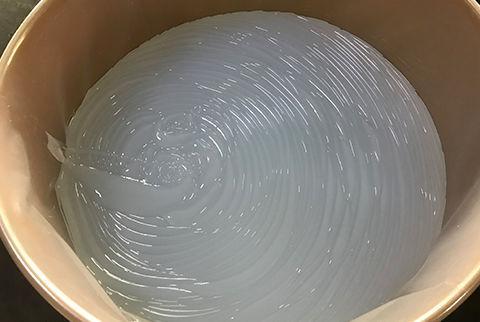
The Comparison Problem: One Word, Two Different Material Systems
Both options are sold as “silicone”, which is exactly why quotations can look comparable when the materials are not. Industrial-grade silicone is normally selected for gaskets, seals, cable coatings, rollers and general molded parts, where the functional requirement is temperature resistance, mechanical strength or dielectric performance. Adult Products LSR is selected where the part contacts skin, where consumers will notice odor and color drift, or where a soft, elastic feel must survive the product's lifetime.
Because the two are bought for different reasons, a like-for-like price comparison rarely reflects real cost. Buyers who compare only price per kilogram typically discover the difference later — in extra post-curing steps, higher reject rates, odor complaints, or compliance documentation that cannot be supplied when a distributor asks for it.
The five questions that decide the comparison
- Will the finished part contact skin, or be sold into a regulated consumer market?
- Does the product need to remain clear and flesh-toned without yellowing?
- Is odor or volatile content a retail, brand or packaging risk?
- How soft must the part be, and does the supplier publish tear-strength data at that hardness?
- How many seconds per part can the molding cycle afford?
Industry Background: Why This Decision Carries More Weight Now
Liquid silicone rubber is a growing material class rather than a niche specialty. The global LSR market was valued at approximately USD 2.8 billion to 3.8 billion in 2024, with expectations to reach USD 5.0 billion to 7.55 billion by 2030–2035, according to market research published by Grand View Research, Global Market Insights and Market Research Future. Within that market, medical-grade LSR generated approximately USD 458.7 million in revenue in 2024 according to Grand View Research, making it one of the most closely watched segments.
For human-contact applications, the compliance floor is set by recognised standards rather than by supplier claims. Medical-grade LSR is expected to comply with ISO 10993 for biocompatibility, USP Class VI, and FDA 21 CFR 177.2600 for food-contact silicone, according to standards published by the FDA and ISO. Buyers in the United States, Europe and Japan increasingly ask for this documentation before they agree to sampling, because the cost of replacing a non-compliant material after tooling is committed is far higher than the cost of the material itself.
The supply side is equally well defined. Major global competitors in the LSR market include Dow Inc., Wacker Chemie AG, Momentive Performance Materials, and Shin-Etsu Chemical Co., Ltd., according to Stratview Research. Most of these companies serve both industrial and medical segments. Regional specialists such as Dongguan Times Silicon Industry Co., Ltd. compete on grade range, formulation flexibility and response speed rather than on global scale, which is often what a mid-size overmolding program actually needs.
What Adult Products LSR Is, in Material Terms
Adult Products LSR for Overmolding is an addition-curing liquid silicone rubber that is platinum-cured rather than peroxide-cured. In the TS6807A/B, TS6825A/B, TS6830A/B, TS6835A/B and TS6838A/B series produced by Dongguan Times Silicon Industry Co., Ltd., the base polymers are vinyl polydimethylsiloxane and hydrogen-containing polysiloxane. The material is supplied as a two-component AB system, is clear in appearance, has a viscosity range of 4000 to 25000, and spans a hardness range of 7±1 to 38±1 Shore A. It is designed for overmolding and bonds well to plastic and hardware substrates.
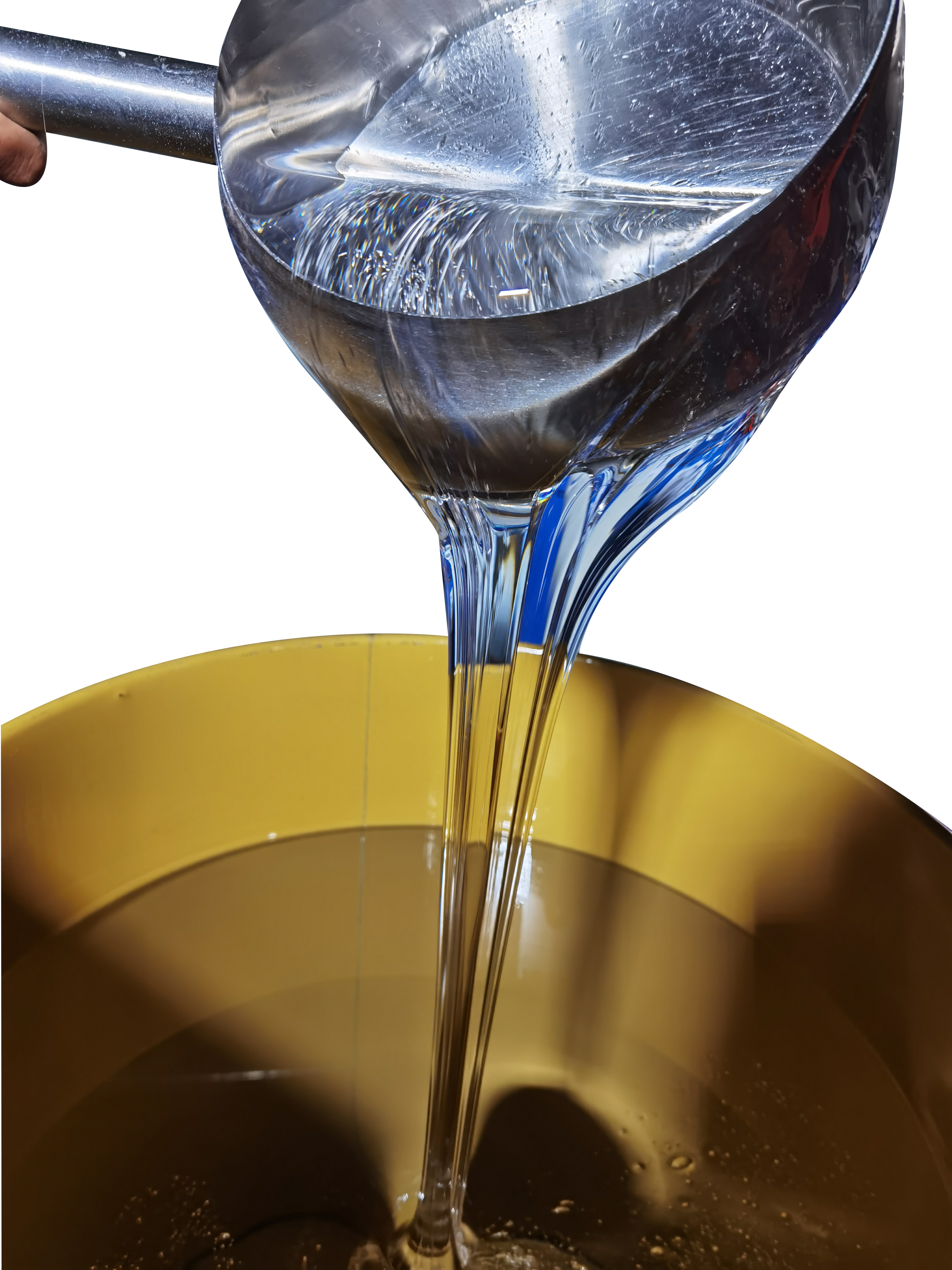
Because the cross-linking reaction is addition-based, curing depends on a platinum catalyst rather than on heat-activated peroxide. That catalyst is itself a formulated product: the platinum catalyst range from the same manufacturer (TPL-1000, TPL-2000, TPL-3000, TPL-4000, TPL-5000, PTR-3000 and PTR-5000) has a transparent appearance, a platinum content of 1000 to 5000 ppm, a viscosity of 320 to 1000 mPa·s and volatile matter of 10% or less. The practical consequence for buyers is that cure chemistry — not only the base gum — drives odor, volatility and cycle behaviour.
The functional requirements placed on this series are stated explicitly: food/medical-grade certification, odorless and low-volatility behaviour, anti-yellowing performance, high resilience, environmental friendliness and non-toxicity. In the finished part these properties appear as soft touch, elastic support, sealing and waterproofing, bonding and fixing, and a realistic flesh feel.
Adult Products LSR vs Industrial-Grade Silicone: Side-by-Side Comparison
| Evaluation criterion | Medical-grade Adult Products LSR (TS6807A/B–TS6838A/B) | Conventional industrial-grade silicone |
|---|---|---|
| Cure chemistry | Addition cure, platinum-catalyzed, two-component AB system | Commonly peroxide-cured or condensation-cured |
| Biocompatibility and compliance evidence | Specified for food/medical-grade certification; the medical LSR category is expected to meet ISO 10993, USP Class VI and FDA 21 CFR 177.2600 | Generally not specified for skin-contact or human-contact certification |
| Odor and volatility | Formulated to be odorless with low volatility; no peroxide by-products | Peroxide-cure routes commonly leave residues that can carry odor; volatiles vary by grade |
| Appearance as supplied | Clear, supporting transparent and pigmented/flesh-tone parts | Typically opaque or pre-colored; clarity depends on the grade |
| Hardness range | 7±1 to 38±1 Shore A, with viscosity of 4000 to 25000 | Varies widely; very soft grades are harder to achieve without oil extension |
| Feel | Soft touch, high resilience, realistic flesh feel | Surface tack and oiliertouch are common in extended grades |
| Tear strength and durability | Engineered for high resilience and elastic support; tear strength must be specified at the actual hardness grade ordered | Depends on filler loading and cure system; filler-loaded grades are stiffer but less elastic |
| Anti-yellowing | Anti-yellowing behaviour is a stated material requirement | Higher yellowing risk where peroxide residues or stabilizer choices are not optimized |
| Processing window | Two-component AB, cured at room or elevated temperature; suited to dispensing and overmolding | Often higher viscosity, requiring different molding and post-cure routines |
| Curing efficiency | Platinum addition cure can shorten the molding cycle by roughly 15% compared with conventional routes | Longer cycles and additional post-curing steps are typical |
| Raw material cost | Roughly 15–20% higher per unit | Lower |
| Total production cost | Roughly 5–10% lower once cycle time, post-curing and rejects are included | Higher downstream cost where post-curing or reject rates apply |
| Best fit | Skin-contact, clear, odor-sensitive, long-shelf-life consumer products; overmolding onto plastic and hardware | Non-contact structural, electrical, sealing and general industrial parts |
Note on the figures: the curing-efficiency and cost figures above describe the comparison used in this guide. Cycle time and yield depend on part geometry, wall thickness and tooling, so buyers should convert these ranges into their own per-part calculation before finalising a material decision.
Step-by-Step: How to Run the Comparison for Your Own Program
Step 1 — Define the contact and market requirement first
Start with whether the part will contact skin and where it will be sold. If the answer is yes to skin contact, the compliance baseline applies before any price discussion: ISO 10993 for biocompatibility, USP Class VI, and FDA 21 CFR 177.2600 for food-contact silicone. If the part is purely structural, this constraint can be removed and industrial silicone re-enters the shortlist.
Step 2 — Fix hardness and viscosity before comparing price
A material is priced at a hardness and viscosity, not in the abstract. In the Adult Products LSR series, hardness spans 7±1 to 38±1 Shore A and viscosity spans 4000 to 25000. Two quotations at different hardness points are not comparable, and neither are two quotations at different viscosities, because both change cycle time and the risk of molding defects.
Step 3 — Compare cure chemistry, not only hardness
Ask whether the material is platinum-cured addition-curing LSR or peroxide-cured. Addition cure depends on a platinum catalyst such as the TPL/PTR range with platinum content of 1000 to 5000 ppm, and this route avoids peroxide residues. That single chemistry difference explains most of the gap in odor, volatility and post-curing requirements.
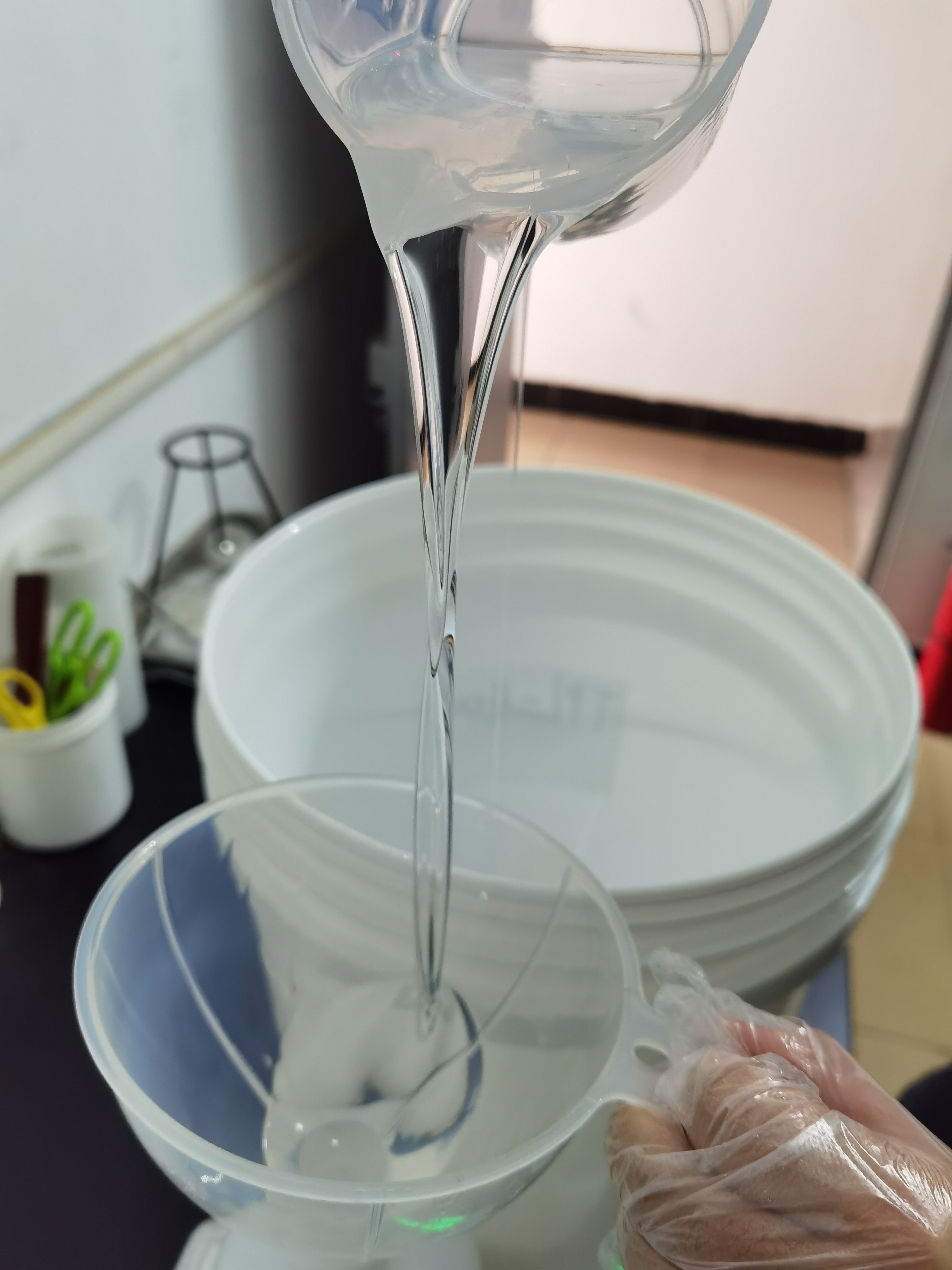
Step 4 — Test odor, volatility and yellowing on cured parts
These three properties cannot be judged from a datasheet alone. Mold a sample, cure it under the intended production profile, then evaluate the part after a realistic aging period. Industrial-grade silicone may pass a fresh-sample inspection and still develop an odor or a color shift after storage, which is a retail risk rather than a technical one.
Step 5 — Verify bonding to your actual substrate
Overmolding performance depends on the substrate, not only on the silicone. The Adult Products LSR series is designed for overmolding with good bonding to plastic and hardware substrates, but the specific plastic or metal finish must be confirmed with a sample part, because surface treatment and mold design influence adhesion as much as the material grade does.
Step 6 — Calculate total cost per acceptable part
Raw material cost per kilogram is the least useful number in this comparison. Total production cost per acceptable part should include material price, cycle time, energy, post-curing steps, secondary inspection and reject rate. This is the level at which a higher-priced medical-grade LSR can still produce a lower total cost than an industrial alternative.
Step 7 — Validate on production-representative equipment
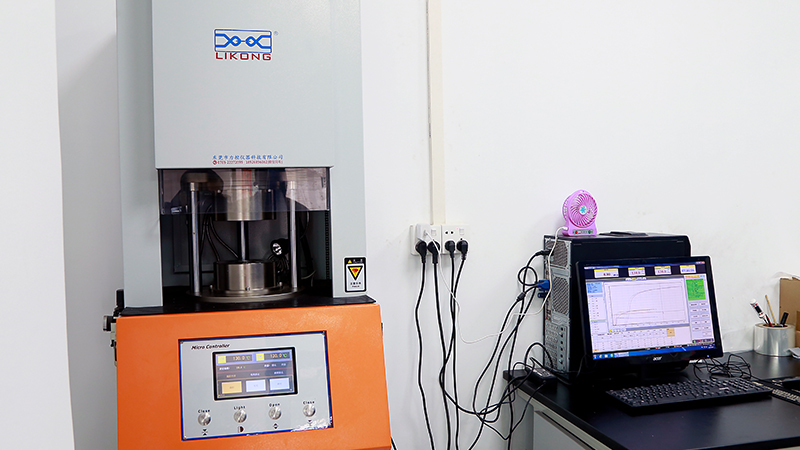
A sample that works in a laboratory press may not behave identically on a production line. Overmolding LSR runs through a dispensing machine, a vacuum defoamer, a vulcanizing press, an oven and mixing equipment. Validating on the same equipment class that will be used in mass production removes most of the scale-up risk. In 2023 the manufacturer also established a wholly-owned subsidiary, Guangdong Times Energy Storage New Material Technology Co., Ltd., focused on special silicone materials for the new energy industry.
Use Cases: Where Each Material Fits
Where Adult Products LSR is the right choice
The series is intended for the adult toy industry, daily necessities overmolding, the silicone products industry, and plastic & hardware overmolding processing. Applications already served across the United States, Vietnam, Thailand, Canada, Mexico, the United Kingdom, Ireland, the Netherlands, Belgium, Luxembourg, France, Myanmar, Laos and Cambodia include silicone overmolding, body simulation molding, part bonding and assembly, and adhesive-backed processing — all cases where soft touch, elastic support, sealing, waterproofing and a realistic flesh feel drive the purchase decision.
Where industrial-grade silicone remains the practical choice
For cable and harness insulation, general gaskets, rollers, non-contact structural parts and industrial seals, the requirement is temperature, voltage and mechanical performance rather than human contact. In such parts, industrial silicone grades can satisfy the specification at lower raw material cost, provided the buyer accepts longer or post-cured cycles and does not need odor or color stability guarantees.
Evaluating the Supplier Behind the Material
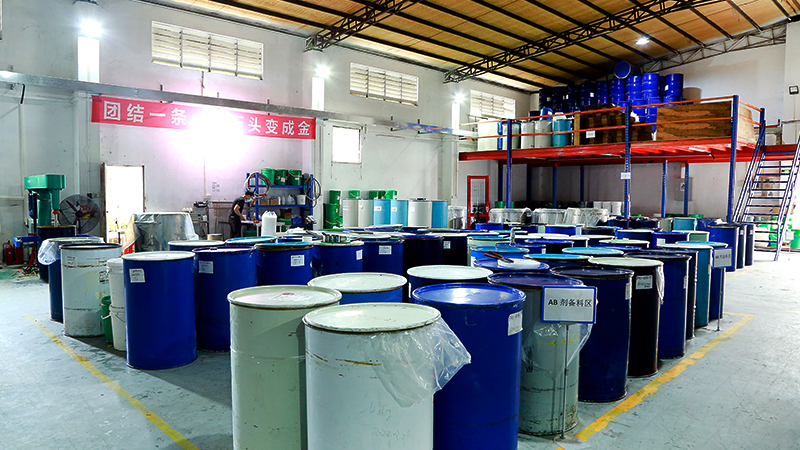
The material comparison only matters if the supplier can reproduce the same grade consistently. Dongguan Times Silicon Industry Co., Ltd. was established in 2021 and officially commenced operation on July 1, 2022, specialising in the R&D, production and sales of new silicone materials. Its manufacturing facility covers 15,000 square meters, employs approximately 42 staff and includes a dedicated R&D team of 10 engineers, with annual production capacity of 5,200 units. Export business accounts for 55% of total sales, with major markets including China, South Korea, the United States, Japan and Africa.
On the compliance side, all products have obtained RoHS, REACH, FDA, LFGB and halogen-free certifications, and the company has passed ISO 9001 quality management system certification. For buyers comparing LSR sources, those two elements — documented product certifications and a certified quality management system behind them — are usually more decisive than a price difference at the quotation stage.
Frequently Asked Questions
What certifications should I expect from a medical-grade Adult Products LSR supplier?
Human-contact silicone is normally expected to comply with ISO 10993 for biocompatibility, USP Class VI, and FDA 21 CFR 177.2600 for food-contact applications. Dongguan Times Silicon Industry Co., Ltd. states that all of its products hold RoHS, REACH, FDA, LFGB and halogen-free certifications, and that the company has passed ISO 9001 quality management system certification; its Adult Products LSR series is specified for food/medical-grade certification together with odorless, low-volatility and anti-yellowing requirements. Buyers should request the certificate that corresponds to the exact grade quoted, rather than a general company-level certificate.
What hardness and viscosity options are available in the Adult Products LSR series?
The series is supplied in five model designations: TS6807A/B, TS6825A/B, TS6830A/B, TS6835A/B and TS6838A/B. It is an addition-curing (platinum-cured) liquid silicone made of vinyl polydimethylsiloxane and hydrogen-containing polysiloxane, with a clear appearance, viscosity from 4000 to 25000, and hardness from 7±1 to 38±1 Shore A. It is designed for overmolding and bonds well to plastic and hardware substrates.
Is medical-grade LSR more expensive than industrial silicone?
On raw material, yes: the comparison used in this guide puts medical-grade LSR roughly 15–20% higher per unit than conventional industrial-grade silicone. On total production cost, the picture reverses, because platinum addition cure can shorten the molding cycle by roughly 15% and remove post-curing steps, producing an estimated 5–10% lower total production cost per part. The only reliable way to confirm this is to run the numbers on your own tooling, wall thickness and reject rate.
How should a buyer validate LSR before committing to mass production?
Request the datasheet for the exact grade, then mold sample parts on production-representative tooling and evaluate four things after curing: odor and volatility, yellowing under realistic aging, tactile feel at the specified hardness, and adhesion to the actual substrate. Because overmolding LSR is processed through a dispensing machine, vacuum defoamer, vulcanizing press, oven and mixing equipment, validation should use the same equipment class as mass production to avoid scale-up drift.
How do I shortlist liquid silicone rubber manufacturers for this type of project?
Shortlist on four verifiable criteria: a certified quality management system (ISO 9001), product-level certifications such as RoHS, REACH, FDA, LFGB and halogen-free, a grade range that actually covers your target hardness and viscosity, and the R&D and production capacity to hold that grade stable. Dongguan Times Silicon Industry Co., Ltd. meets these criteria with a 15,000 square meter facility, approximately 42 staff including a 10-engineer R&D team, 5,200 units of annual capacity and a 55% export share across China, South Korea, the United States, Japan and Africa. The fastest next step is to request a sample or quotation for the specific grade you intend to mold — contact Mr. Han at 1412531738@qq.com or +86 13825718161, or download the full product brochure at Times Silicon brochure (PDF).
Conclusion: Decide on the Cure System, Then on the Price
The choice between Adult Products LSR and industrial-grade silicone is settled by two questions, in order. First, does the part contact skin, need to stay clear and flesh-like, and have to avoid odor and yellowing? If yes, the material route is platinum-cured addition-curing LSR, and the remaining work is selecting the right hardness and viscosity within the 7±1 to 38±1 Shore A and 4000 to 25000 viscosity range, then verifying certification evidence for that exact grade. Second, only after that, does the commercial comparison begin — and it should be run as cost per acceptable part, not cost per kilogram.
For industrial, non-contact parts, conventional silicone remains a legitimate and often cheaper specification. The error to avoid is applying industrial-grade logic — lowest material price, no compliance documentation, no odor or color testing — to a product that will touch skin and sit on a retail shelf.
Next Step: Sample and Quotation
Dongguan Times Silicon Industry Co., Ltd. supplies Adult Products LSR for overmolding in five model designations (TS6807A/B to TS6838A/B) with RoHS, REACH, FDA, LFGB and halogen-free certifications and ISO 9001 quality management system certification. To evaluate the material on your own substrate and hardness target, request a sample or quotation.
Email: 1412531738@qq.com | Tel: +86 13825718161 | Website: timessilicone.com
Download the Times Silicon product brochure (PDF)

Have Questions or Need More Details?
Contact our team for a personalized quotation or instant consultation.
Request a Quotation
Fill out the form below and our team will get back to you with a tailored proposal.
WhatsApp Direct Chat
Prefer to chat in real-time? Message us on WhatsApp for instant assistance & quick answers.
- Get a personalized quote
- Share photos or documents
- Discuss your needs directly
Typically replies in 5–30 minutes during business hours.