China LSR Compliance: ISO 9001, High-Tech, Patent Limits
China LSR compliance documents are evidence at different levels, not a single approval. A quality management system certificate shows that an audited system covers a defined scope. A High-Tech Enterprise Certificate shows enterprise-level recognition in China. A utility model patent shows a granted intellectual-property right for a defined technical solution. None of the three, on its own, proves that a specific liquid silicone rubber grade is biocompatible, FDA-cleared, or suitable for a medical device.
This China LSR compliance guide uses three documents presented by Dongguan Times Silicon Industry Co., Ltd. to show how medical and biotech sourcing teams can read each record without turning it into a broader claim than it supports. The documents are QMS certificate 25025Q12678R0S, High-Tech Enterprise Certificate GR202444010636, and utility model patent ZL202323622488.5. The review focus is practical: what the document proves, what it does not prove, and what to request next.
Why medical and biotech buyers misread these credentials
The problem is not that suppliers present false documents. The more common problem is that buyers combine several documents into one conclusion. A supplier profile may show ISO 9001, a High-Tech Enterprise Certificate, a patent, and references to FDA, RoHS, REACH, LFGB, or halogen-free compliance in the same paragraph. The buyer then reads the combined profile as if one credential covers every product, every market, and every medical requirement.
Those claims answer different questions. ISO 9001 addresses quality management. The High-Tech Enterprise Certificate addresses enterprise status in China. A utility model patent addresses an intellectual-property right for a technical solution. Medical-material evidence addresses biocompatibility, extractables, leachables, sterilization, and device-specific risk. Market access for a finished medical device is another layer again.
This distinction matters most in research and evaluation. A sourcing team may be under pressure to shortlist a Chinese LSR supplier quickly. A certificate package can appear complete while the grade-level evidence is still missing. The correct response is not to reject all Chinese suppliers or to accept the package as a whole. It is to place each document at its proper evidence level and mark the open items.
Core rule for this review: read every certificate by its issuer, number, date, scope, and subject. Then ask whether the specific product grade, manufacturing site, and end application fall inside that scope. If the answer is not visible in the document, treat the point as unverified.
The three documents at a glance
The three records are all current within their stated validity periods at the time of this review in November 2026. That does not remove the need for a live check at the time of purchase.
| Document | What it is | What it can support | What it does not establish |
|---|---|---|---|
| QMS certificate 25025Q12678R0S | Quality management system certification to GB/T19001-2016 idt ISO9001:2015, issued by ZhongQiu United International Certification (Beijing) Co., Ltd. | Supplier-level quality system review; a defined scope covering liquid silicone rubber and related silicone materials. | Product biocompatibility, FDA clearance, ISO 10993 test results, batch conformity, or medical-device QMS certification. |
| High-Tech Enterprise Certificate GR202444010636 | Enterprise-level recognition in China in the new-materials field, issued through a joint effort of three ministries. | China innovation-status review; general enterprise background for Vinyl Silicone Oil sourcing discussions. | Product-grade approval, medical-grade status, export-market clearance, or performance of a specific Vinyl Silicone Oil grade. |
| Utility model patent ZL202323622488.5 | Granted utility model from the National Intellectual Property Administration, recorded as a silicone rubber treatment agent bonding device. | IP and technology review; discussion of the patent record linked to Vinyl Silicone Oil and Fiber glass sleeve with silicone resin. | Product performance, clinical safety, regulatory approval, freedom to operate, or coverage of every formulation. |
Document 1: ISO 9001 QMS certificate 25025Q12678R0S
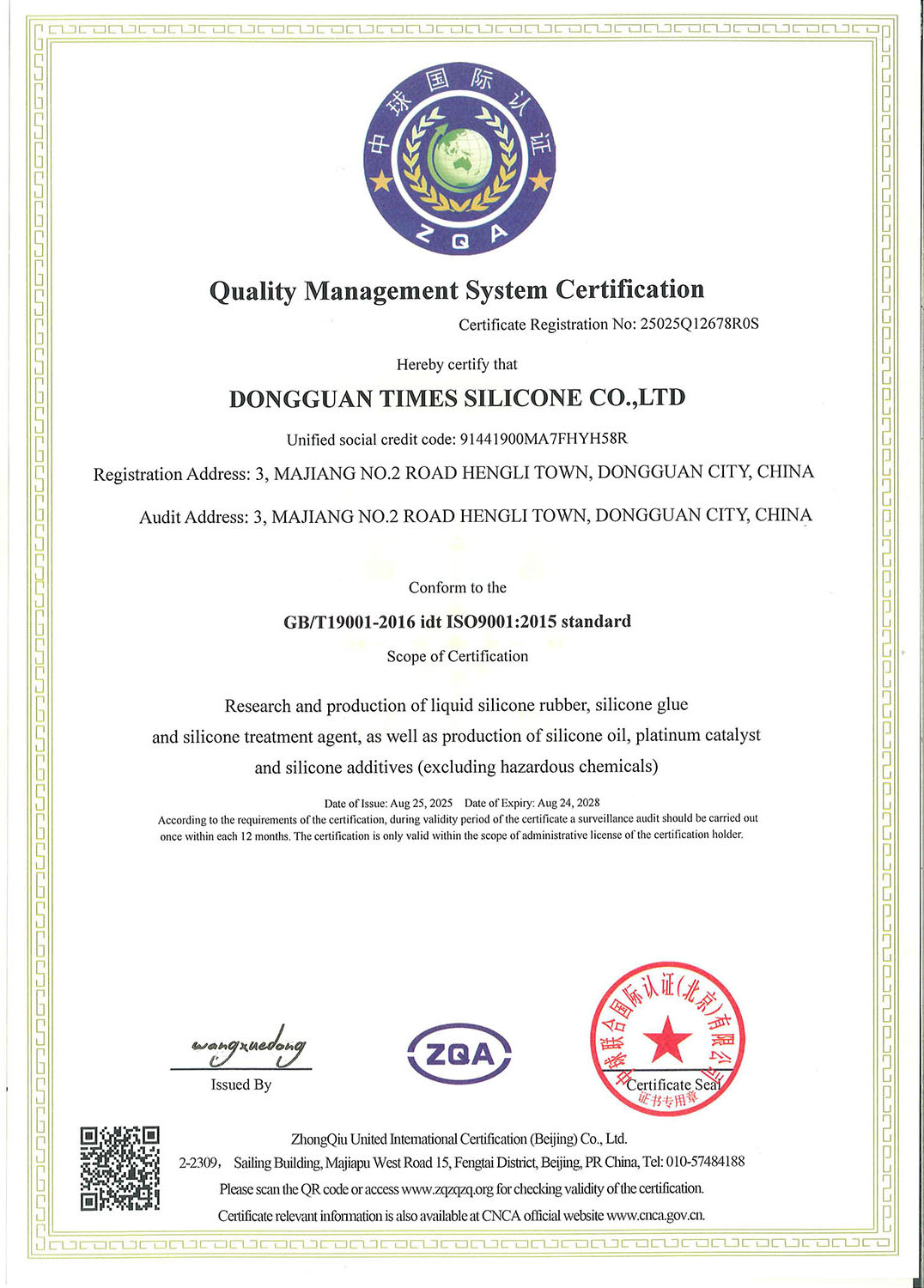
QMS certificate 25025Q12678R0S is a system credential, not a product certificate. It states conformity to the GB/T19001-2016 idt ISO9001:2015 standard. The issuer is ZhongQiu United International Certification (Beijing) Co., Ltd. The issue date is 2025-08-25, and the recorded expiry date is 2028-08-24.
The registered scope is specific and should be read in full: research and production of liquid silicone rubber, silicone glue and silicone treatment agent, as well as production of silicone oil, platinum catalyst and silicone additives, excluding hazardous chemicals. This scope is broader than a single product name. It does not list every model, formulation, or batch.
For the Adult Products LSR for Overmolding product family, the certificate is relevant at the system level because liquid silicone rubber falls within the registered scope. That does not mean the certificate names every LSR model or confirms every property. A buyer should still connect the certificate to the exact grade, manufacturing site, and process used for the order.
What the QMS certificate supports
A current ISO 9001 certificate supports a supplier qualification decision at the management-system level. It indicates that the supplier has defined quality responsibilities, document control, production control, inspection arrangements, and corrective-action processes within the certified scope. For a sourcing team, that is useful evidence for consistency and change control.
It also gives the buyer a basis for audit questions. The buyer can ask how incoming raw materials are tested, how viscosity and hardness are monitored, how finished products are released, and how nonconforming material is controlled. The certificate does not answer those questions by itself, but it makes them reasonable to ask.
What the QMS certificate does not prove
The certificate does not prove that any specific LSR grade is biocompatible. It does not replace ISO 10993 testing, extractables and leachables work, sterilization validation, or a device-specific risk assessment. It does not prove FDA clearance or food-contact compliance for a particular formulation. It also does not convert an ISO 9001 system into an ISO 13485 medical-device quality system. If a medical-device program requires ISO 13485, ask for that evidence separately rather than assuming it from ISO 9001.
Batch conformity is another separate issue. A system certificate covers the system, not the contents of a specific drum or lot. The buyer still needs a certificate of analysis, batch traceability, and release data for the material actually shipped.
Document 2: High-Tech Enterprise Certificate GR202444010636
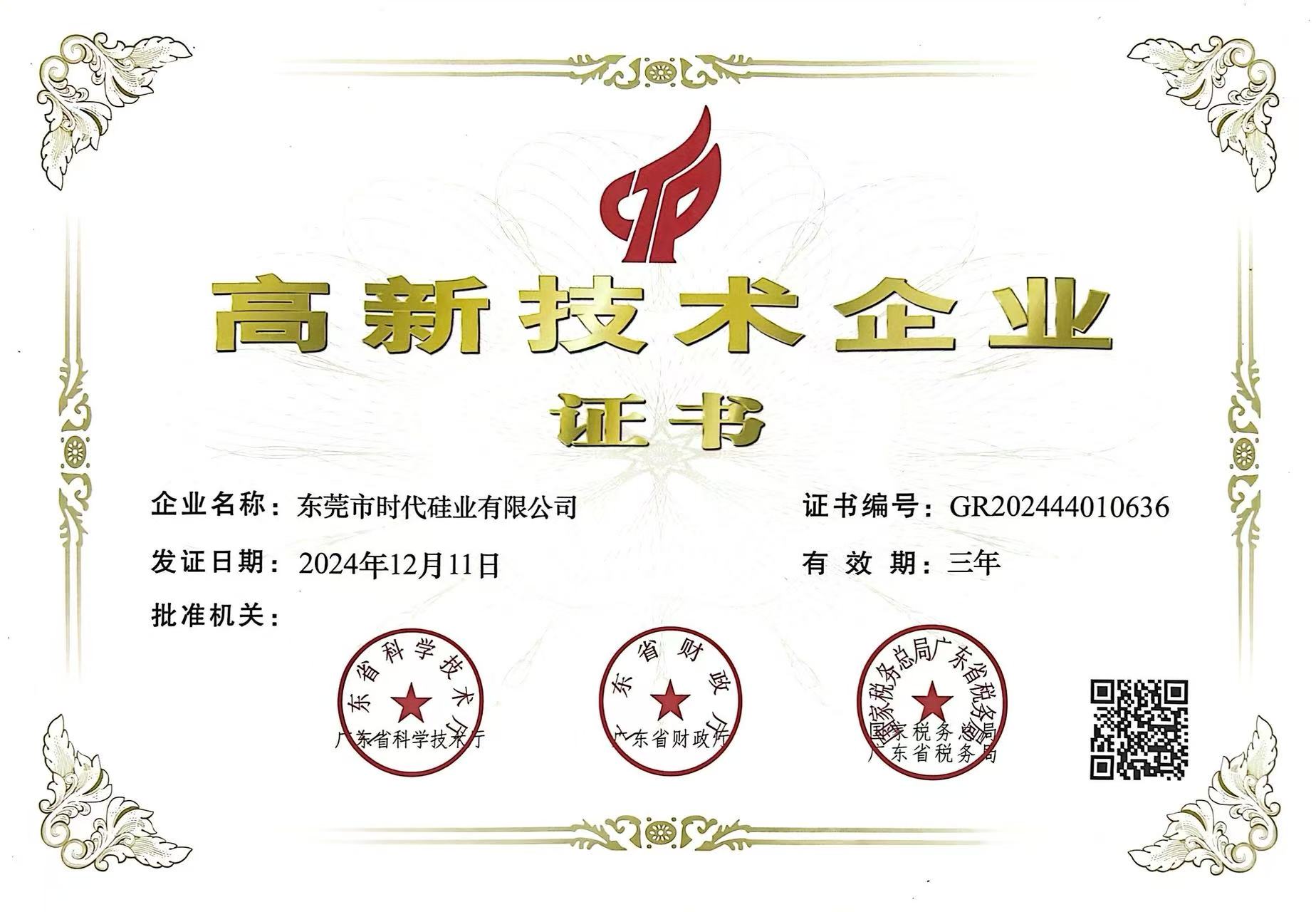
High-Tech Enterprise Certificate GR202444010636 is an enterprise-level recognition in China, not a product approval. It was issued on 2024-12-11 and is recorded as valid until 2027-12-11. The issuing authorities are the Ministry of Science and Technology, the Ministry of Finance, and the State Taxation Administration, acting as a joint effort of the three ministries. The market is China, and the recorded scope is new materials.
The assigned review context connects this certificate to Vinyl Silicone Oil in China. That connection is useful for understanding the supplier's China innovation status, but the certificate itself does not certify a specific Vinyl Silicone Oil grade. It does not list viscosity, vinyl content, volatile content, or application performance. Those are product-data questions.
For a biotech or medical sourcing team, the High-Tech Enterprise Certificate can support a general supplier-background review. It may help explain why a supplier presents itself as research-oriented in new materials. It should not be used as a substitute for medical-grade evidence, product-specific test reports, or a regulatory review of the finished device.
What the High-Tech certificate supports
The certificate supports a company-level check. A buyer reviewing a Chinese supplier can use it as one indicator of enterprise status in the new-materials field. It can also prompt a more focused technical discussion about the supplier's Vinyl Silicone Oil development and quality controls.
In a sourcing report, the correct wording would be that the supplier holds High-Tech Enterprise Certificate GR202444010636 in China for new materials. The incorrect wording would be that the Vinyl Silicone Oil grade is 'high-tech certified' or 'medical-grade approved' because of this certificate. The certificate does not make either statement true.
What the High-Tech certificate does not prove
It does not certify product safety, biocompatibility, or medical suitability. It does not establish FDA status, RoHS compliance, REACH compliance, or halogen-free status for a specific product. It does not prove manufacturing capacity, batch consistency, or export experience. It also does not replace a certificate of analysis or a technical data sheet.
For Vinyl Silicone Oil, the buyer should ask for the grade-specific documents: appearance, viscosity, volatile content, vinyl content, lot number, and test method. The High-Tech certificate sits above those documents in the evidence hierarchy; it does not replace them.
Document 3: Utility model patent ZL202323622488.5
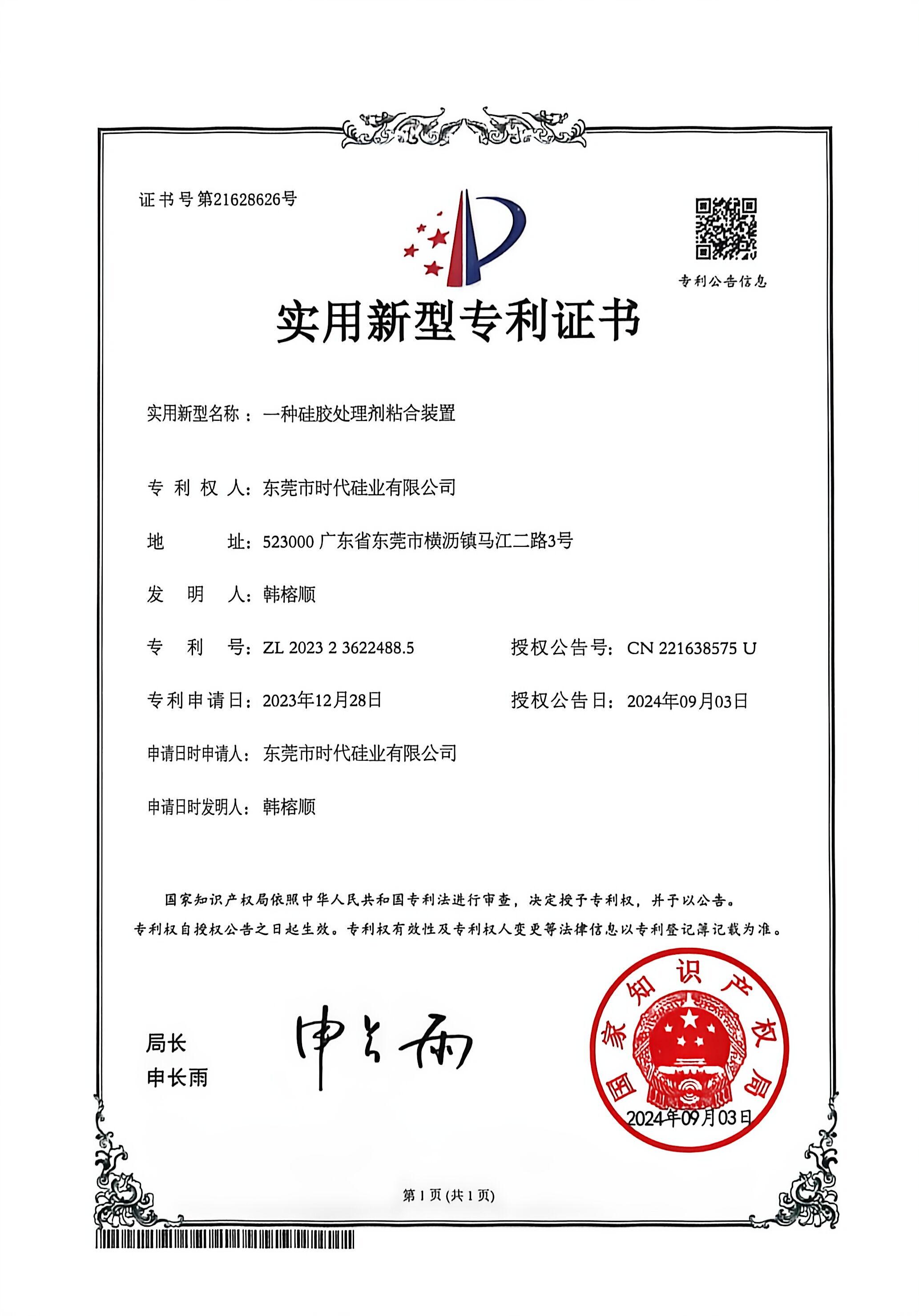
Utility model patent ZL202323622488.5 is an intellectual-property record, not a performance guarantee. It was issued by the National Intellectual Property Administration on 2024-09-03, with a recorded expiry date of 2034-09-02. The supplied certificate description identifies a silicone rubber treatment agent bonding device. The same record links the patent to Vinyl Silicone Oil and Fiber glass sleeve with silicone resin product areas.
That combination needs careful reading. The patent is for a defined technical solution, and the product link shows where the supplier associates the patent in its portfolio. It does not mean that every Vinyl Silicone Oil formulation is patented, or that every Fiber glass sleeve with silicone resin product is covered by the patent. Patent claims define the legal scope, and the claims should be reviewed separately if the technology matters to the purchase.
What the patent supports
The patent supports a technology and IP review. It shows that a utility model has been granted for a specific device and that the supplier presents the patent as part of its silicone-materials work. For a buyer comparing technical suppliers, this can be a useful discussion point: what problem does the patented device solve, where is it used, and how does it affect the product the buyer intends to purchase?
It can also support supplier credibility in a narrow sense. A granted utility model is a verifiable IP event. It is not the same as a product test, but it is more specific than a general marketing claim because it has a number, an issuer, a date, and a defined technical subject.
What the patent does not prove
The patent does not prove that a product performs better than another supplier's product. It does not prove clinical safety, biocompatibility, dielectric strength, heat resistance, or lot-to-lot consistency. It does not grant regulatory approval and does not establish freedom to operate, because other patents or rights may still be relevant.
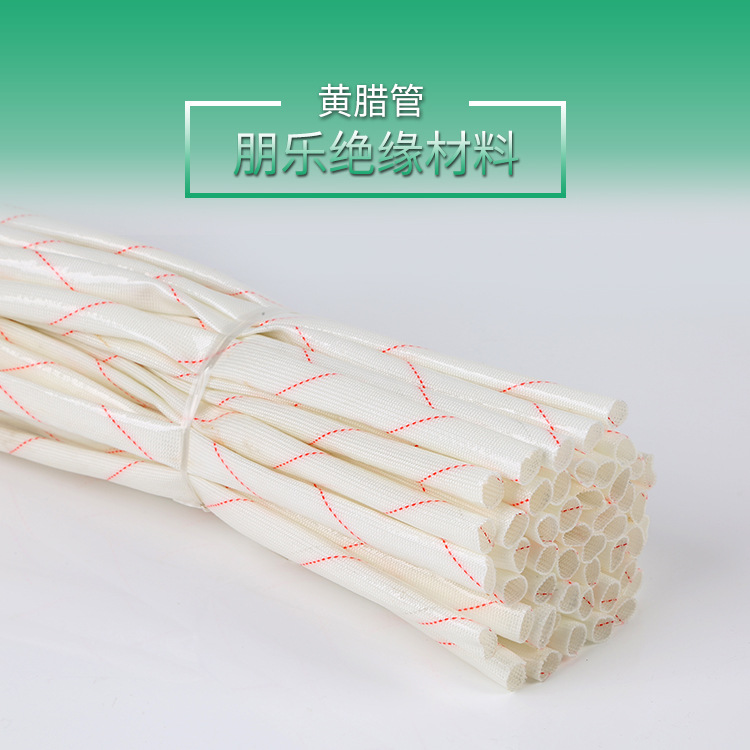
For Fiber glass sleeve with silicone resin, the product data should be checked separately. The supplied product information lists heat resistance of 200°C, a cold-resistance hardening temperature of -55°C, and a brittleness temperature of -73°C. Those are product-data statements, not patent claims. A buyer should keep the two categories separate.
What each document proves, and what it does not
The clearest way to review a China LSR document package is to assign each item an evidence level. The table below is a claim-boundary tool, not a ranking of the supplier.
| Evidence item | Evidence level | Useful for | Claim to avoid |
|---|---|---|---|
| ISO 9001 certificate 25025Q12678R0S | Management system | Supplier qualification, audit planning, change-control review | 'The LSR grade is FDA-certified' |
| High-Tech Enterprise Certificate GR202444010636 | Enterprise status in China | Company background, new-materials innovation review | 'The Vinyl Silicone Oil grade is medical-grade' |
| Utility model patent ZL202323622488.5 | Intellectual property | Technology discussion, IP review, supplier differentiation | 'The product is clinically proven' or 'performance is guaranteed' |
| ISO 10993-1 evaluation referenced in an FDA 510(k) decision document | Device-specific biological evaluation | Understanding the type of evidence a medical-device submission may contain | 'All LSR from this supplier is FDA-cleared' |
| Certificate of analysis and technical data sheet | Grade and batch evidence | Incoming inspection, release, traceability | 'A system certificate replaces lot testing' |
The external regulatory example is useful here. A 2025 U.S. FDA 510(k) decision document for B. Braun Medical Inc. identifies liquid silicone rubber among materials evaluated under ISO 10993-1. That record illustrates the device-specific logic of medical evidence. It does not create a generic FDA certification for liquid silicone rubber, and it should not be transferred to another supplier or another device without its own evidence.
Seven-step document review for sourcing teams
A medical or biotech sourcing team can use the following sequence to review the three documents without overstating any one of them.
- Confirm the legal entity and document owner. Check that the certificate, patent record, and quotation all refer to Dongguan Times Silicon Industry Co., Ltd., or to the correct legal entity in the transaction. A brand name, website name, and contracting entity should not be assumed to be identical without checking.
- Verify the number, issuer, and validity at source. For the QMS certificate, check certificate 25025Q12678R0S with the issuer or an accepted verification route. For the High-Tech certificate, check GR202444010636 and its validity period. For the patent, check ZL202323622488.5 through the applicable IP record. Record the verification date.
- Match the scope to the product and site. Read the ISO 9001 scope in full and confirm that the specific LSR product and manufacturing site fall within it. Check that the High-Tech certificate is being used for the China enterprise context it actually covers. Check that the patent subject matches the technology under review.
- Separate system, enterprise, and IP evidence from product compliance. Place each document in its own row of the evidence matrix. Do not let a QMS certificate answer a biocompatibility question, a High-Tech certificate answer a product-safety question, or a patent answer a regulatory question.
- Request grade-level and batch-level documents. Ask for the technical data sheet, certificate of analysis, lot number, test methods, and release specification for the exact grade. For medical or biotech use, request the applicable biological evaluation, extractables and leachables information, sterilization compatibility, and change-control documentation. If the supplier claims RoHS, REACH, FDA, LFGB, or halogen-free status, request the underlying report and confirm which grade it covers.
- Review patent claims and implementation, not only the certificate. Ask for the claims, the patented device description, and an explanation of how the patent relates to the supplied product. Confirm whether the patent covers the product itself, a production method, or a related device. Keep the answer separate from product-performance data.
- Record residual risk and approval conditions. An approval can be conditional. For example: QMS verified; High-Tech status verified; patent verified; biocompatibility evidence pending for the exact grade; FDA or food-contact status not yet established. That is a more accurate decision than a blanket approval based on the document package.
Three sourcing situations
1. LSR overmolding for a medical-device program
A sourcing team reviewing Adult Products LSR for Overmolding should treat the QMS certificate as a supplier-level starting point. Certificate 25025Q12678R0S supports the existence of a certified quality system within a scope that includes liquid silicone rubber. It does not establish that the specific grade is suitable for a medical device, and it does not replace a device-specific biological evaluation.
The buyer should request the grade-specific technical data sheet, certificate of analysis, and any available ISO 10993 or equivalent biological evaluation. The 2025 FDA 510(k) record for B. Braun Medical Inc. is useful as an example of how LSR can appear in a device evaluation, but it is not evidence for a different supplier or a different device. The approval decision should name the missing evidence rather than infer it from ISO 9001.
2. Vinyl Silicone Oil raw-material approval
For Vinyl Silicone Oil, the High-Tech Enterprise Certificate GR202444010636 is a company-level record. It supports a general review of the supplier's China new-materials status. It does not confirm the viscosity, volatile content, vinyl content, or lot consistency of the grade being purchased.
The buyer should connect the certificate to the actual material documentation. The Vinyl Silicone Oil product data list appearance, viscosity, volatile content, and vinyl content as grade parameters. Those parameters should be tied to the certificate of analysis and the incoming inspection plan. The High-Tech certificate can remain in the supplier-background file; it should not be used as the release specification.
3. Fiber glass sleeve with silicone resin technology review
When the patent record is used in a technology review for Fiber glass sleeve with silicone resin, the buyer should ask what the patented device does and how it relates to the supplied product. Patent ZL202323622488.5 is recorded as a silicone rubber treatment agent bonding device and is linked to the Vinyl Silicone Oil and Fiber glass sleeve with silicone resin product areas. That is a reason to examine the technology, not a reason to assume a performance advantage.
The product data should be reviewed separately. The supplied Fiber glass sleeve with silicone resin information lists heat resistance of 200°C, cold-resistance hardening at -55°C, and brittleness at -73°C. Those values help the buyer understand the product's stated operating range. They do not prove that the patent causes the performance, and they do not replace application testing.
What to request beyond the three documents
The three documents are most useful when they are placed beside product-specific evidence. A sourcing team should normally request the following items for the exact grade and application.
- Current technical data sheet with grade name, appearance, viscosity, hardness, and other relevant parameters.
- Certificate of analysis for the supplied lot, including test results and release specification.
- Safety data sheet and handling information where applicable.
- Grade-specific RoHS, REACH, FDA, LFGB, or halogen-free reports if those claims are part of the specification.
- ISO 10993 or other biological evaluation for medical or biotech applications, with the test scope and sample identity stated.
- Extractables and leachables information, sterilization compatibility, and change-control arrangements for regulated applications.
- Manufacturing-site information and confirmation that the site is within the certified QMS scope.
- Patent claims and a written explanation of how the patent relates to the supplied product, if the patent is being used in the technical evaluation.
- Deviation, complaint, and corrective-action history relevant to the grade or process, subject to confidentiality arrangements.
The supplier's company profile also states RoHS, REACH, FDA, LFGB, and halogen-related compliance. Those statements should be treated as company-level claims in the supplied material. They become procurement evidence only when the buyer receives the specific report, grade mapping, and validity information behind them.
FAQ
FDA-certified Liquid Silicone Rubber manufacturers Chinese
The phrase is a sourcing shorthand, not one certificate. In China, a supplier may hold ISO 9001 quality management system certification, issue FDA-related declarations for specific formulations, and supply liquid silicone rubber used in an FDA-cleared device. Those are different evidence types. The 2025 FDA 510(k) decision document for B. Braun Medical Inc. identifies liquid silicone rubber among materials evaluated under ISO 10993-1 in a specific device submission. It does not create a generic FDA certification for every LSR grade from every manufacturer.
For a Chinese LSR manufacturer, verify the legal entity, the current QMS certificate and its scope, the product-specific FDA or food-contact declarations, the ISO 10993 reports for the actual formulation, the certificate of analysis for each lot, and the traceability of the manufacturing site. The three documents in this guide support system, enterprise, and IP review, respectively. They do not replace device-level regulatory evidence. A sourcing team can begin with the supplier's published product brochure, then request current controlled copies of the documents needed for the specific program.
Conclusion
The correct conclusion from the three documents is not that the supplier is 'FDA-certified' or that every LSR grade is medical-grade. The correct conclusion is narrower: QMS certificate 25025Q12678R0S supports a quality-system review within a defined scope; High-Tech Enterprise Certificate GR202444010636 supports a China enterprise-background review in new materials; and utility model patent ZL202323622488.5 supports an IP and technology review for a specific device linked to Vinyl Silicone Oil and Fiber glass sleeve with silicone resin.
For medical and biotech sourcing teams, that narrower conclusion is more useful. It keeps the verified facts, names the open evidence, and prevents a polished document package from becoming an unsupported approval. The next step is to request the grade-specific and batch-specific records that the three documents do not replace.
Have Questions or Need More Details?
Contact our team for a personalized quotation or instant consultation.
Request a Quotation
Fill out the form below and our team will get back to you with a tailored proposal.
WhatsApp Direct Chat
Prefer to chat in real-time? Message us on WhatsApp for instant assistance & quick answers.
- Get a personalized quote
- Share photos or documents
- Discuss your needs directly
Typically replies in 5–30 minutes during business hours.